
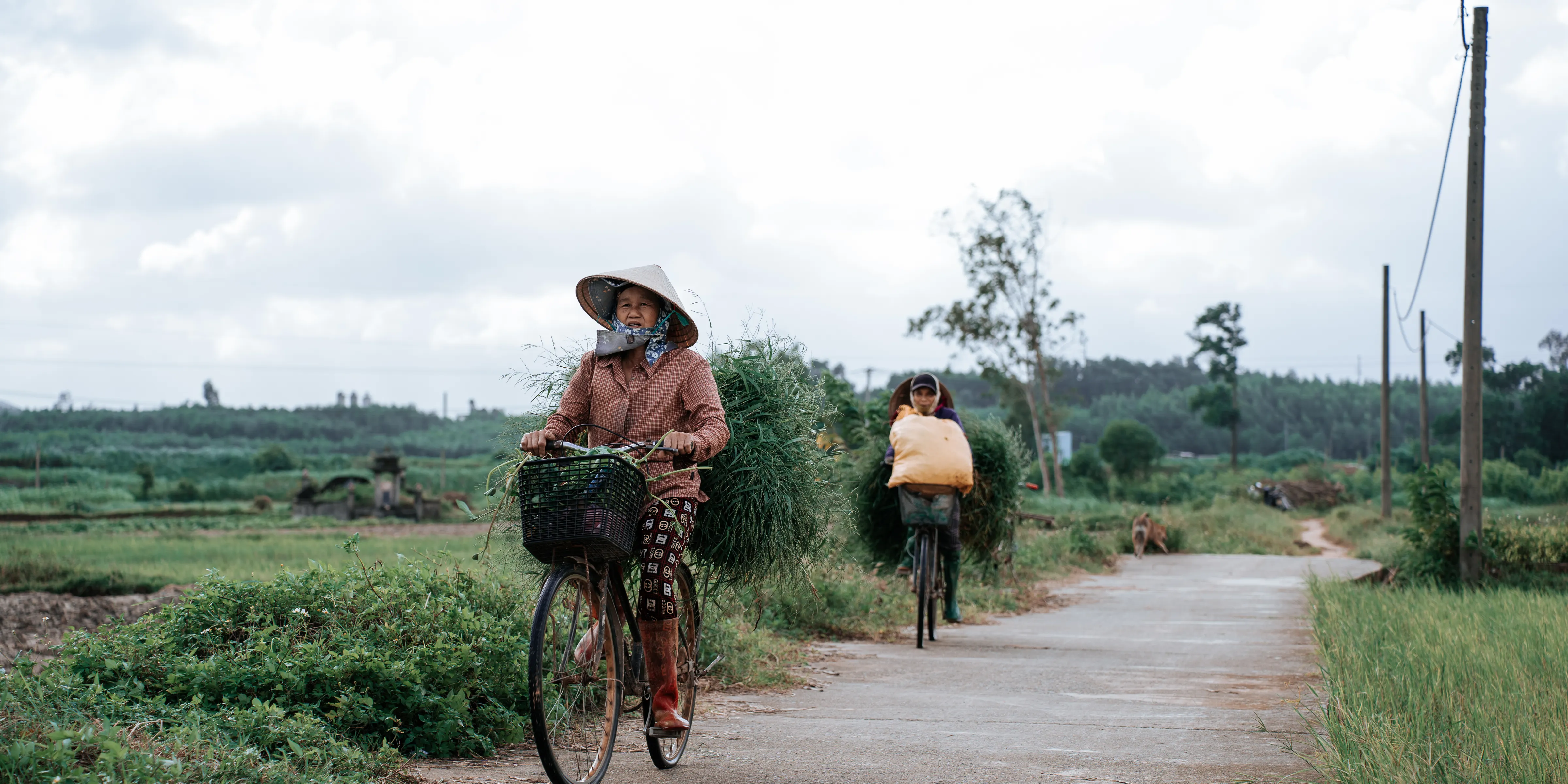
Hoi An Countryside Cycling & Cooking Class
A morning cycling to a vegetable village, followed by a hands-on Vietnamese cooking class
What makes this different
Hoi An's food reputation rests on ingredients grown just outside the old town, and this morning goes to see where they come from before turning them into lunch. The ride is flat and unhurried, suited to any level of cycling confidence, and it covers the parts of Hoi An that a walking tour of the old town never reaches.
Leaving the covered market, the route follows quiet lanes past rice fields, water buffalo and small family farms, reaching Tra Que village after about twenty minutes. Tra Que has grown herbs and vegetables for Hoi An's kitchens for generations, using a traditional method of fertilising the sandy soil with algae drawn from the surrounding canals. Walking between the raised beds, your guide points out the specific herbs, mint, coriander, Vietnamese basil, fish mint, that give central Vietnamese food its character.
From the village, the ride continues to a local market, smaller and less touristed than Hoi An's central market, where your cooking teacher selects the day's ingredients: fresh noodles, pork, shrimp, and whatever vegetables look best that morning. Shopping here, with someone who knows the vendors, gives a clearer sense of how Vietnamese households actually cook than any recipe book.
The cooking class takes place at a family kitchen or riverside cooking school outside the old town, with space for hands-on preparation rather than a demonstration you watch from a distance. Over the class, you make white rose dumplings, delicate shrimp parcels shaped by hand, banh xeo, the crisp turmeric pancake folded around pork and bean sprouts, fresh spring rolls, and a herb salad using what you picked up at the market. Your teacher corrects technique as you go, particularly the fold on the white rose dumplings, which takes most people a few attempts.
Lunch is the meal you've made, eaten together at the kitchen table or on a shaded terrace, with tips on which dishes travel well and which are best eaten immediately.
The ride is around eight kilometres round trip on flat terrain, suitable for beginners and children old enough to cycle independently. Electric bicycles are available on request for those who prefer less effort.
The best time to visit is February to April, when mornings are cool and dry. The rainy season, September to December, can flood the fields, though the cooking class itself continues regardless of weather.
The morning lasts around five hours. Bicycle hire, a guide, the market visit and all cooking class ingredients are included. Hotel transfer and gratuities are not.
Highlights
- Cycling through rice fields and the Tra Que herb village
- Market shopping with your cooking teacher
- Five central Vietnamese dishes made from scratch
What's included
Included
- Bicycle hire
- Guide
- Market visit
- All cooking class ingredients
- The meal you prepare
Not included
- Hotel transfer
- Gratuities
Verified operator
Vetted in-person by our team
Exclusively private
Your group only — never shared
Free cancellation
Full refund up to 48h before
Before you book
What's included
- Cycling through rice fields and the Tra Que herb village
- Market shopping with your cooking teacher
- Five central Vietnamese dishes made from scratch
No commitment — we'll confirm availability and tailor every detail to you.


More Tours & Tickets in Hoi An
Round out your trip with top-rated, instantly bookable activities nearby.