
Chongqing
A mountain megacity of cliffside towers, cable cars and monorails at the meeting of two rivers
Chongqing
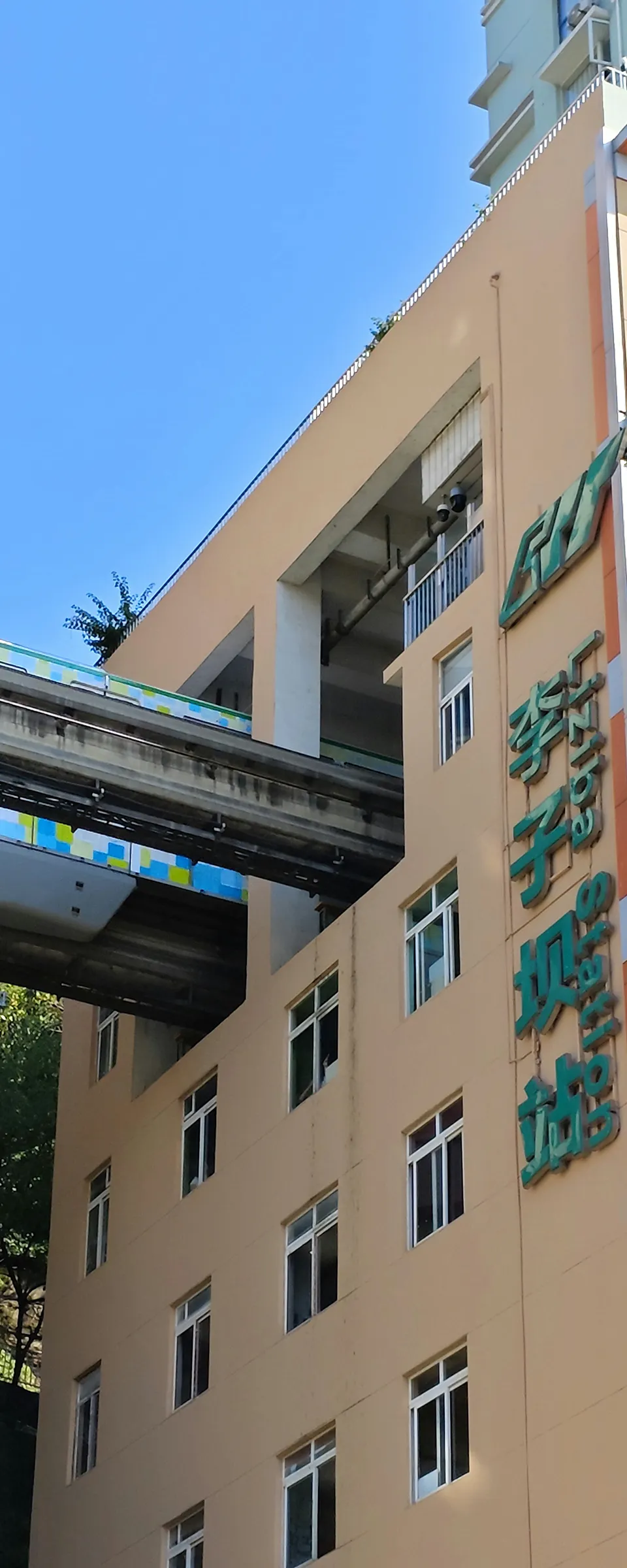
Chongqing is one of the largest cities in China and one of the strangest to look at. It is built on steep hills at the point where the Jialing River joins the Yangtze, and its towers, bridges and roads climb the slopes in layers, so that a street on one level can pass over the roof of a building on another. Foreign visitors often call it the 8D city, a nickname that reflects the way the buildings, tunnels and elevated roads seem to overlap. A monorail that runs through the middle of a residential block, a cable car that crosses the Yangtze, and a square that stands on the twenty-second floor of a tower are among the sights that made the city famous online.
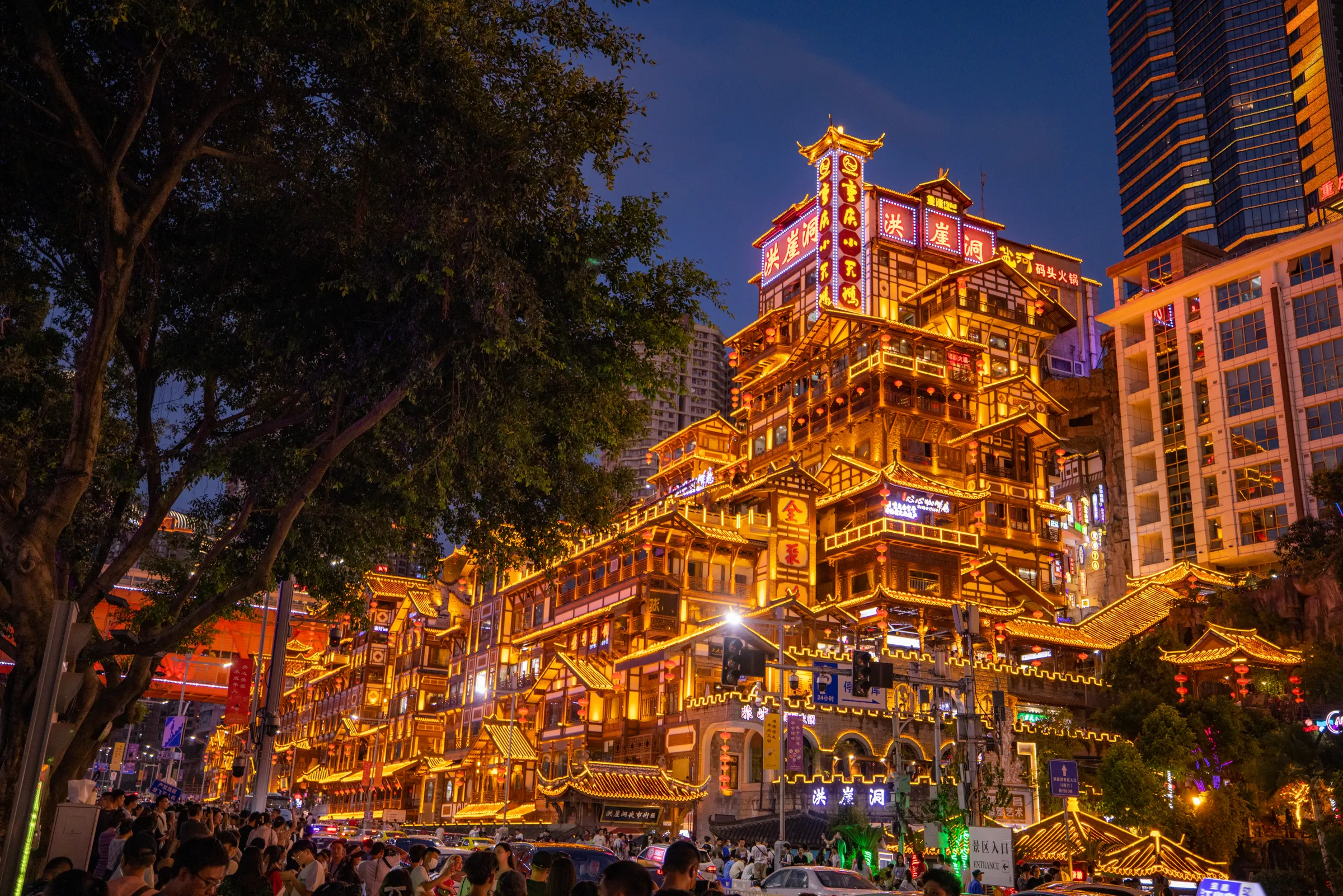
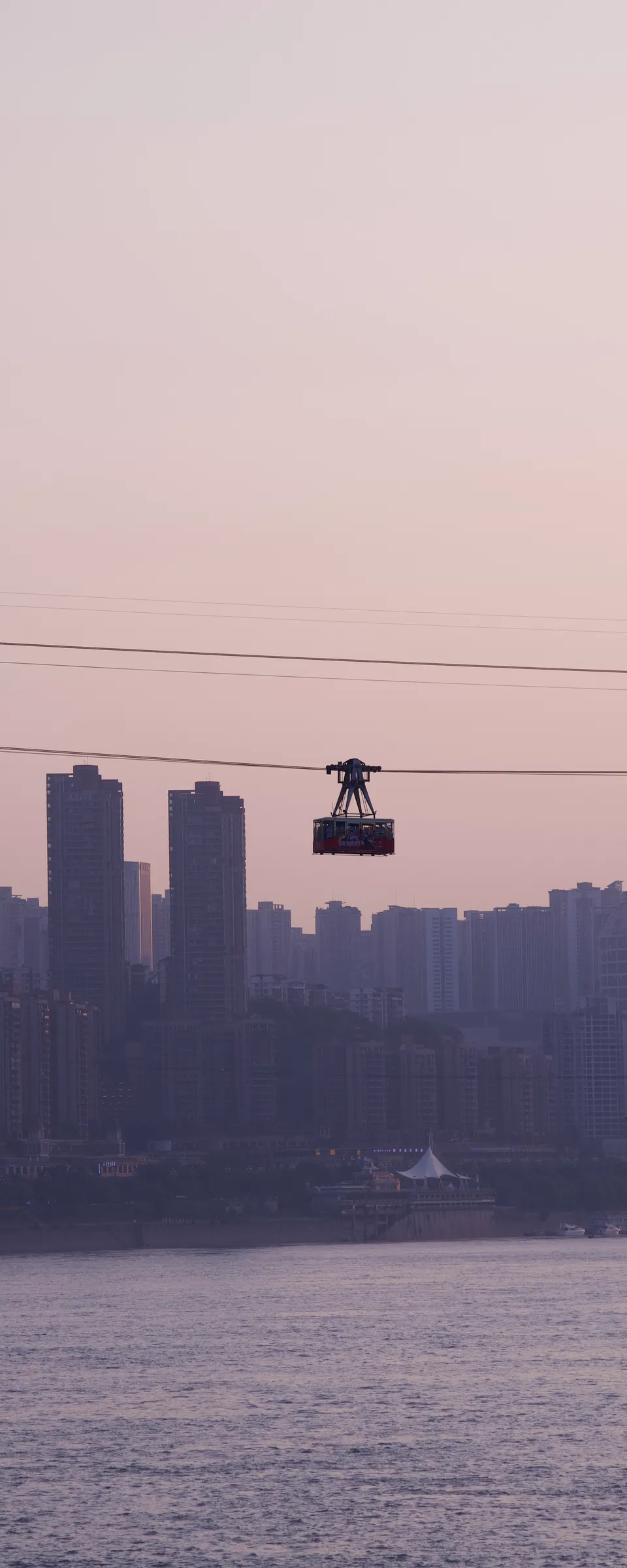
The old city sits on the peninsula between the rivers. Jiefangbei, the central pedestrian district, is a forest of shops and skyscrapers, and the Hongya Cave complex, a cluster of stilted buildings that climb the cliff above the Jialing, glows at night and is the most photographed scene in the city. Nearby, the Luohan Temple, a thousand-year-old Buddhist sanctuary hidden between office blocks, holds five hundred carved arhats, each with a different expression. The Three Gorges Museum covers the history of the region and the culture of the Yangtze valley, and the Yangtze River Cableway, one of the few survivors of its kind, carries passengers across the river with a view of the ships below.
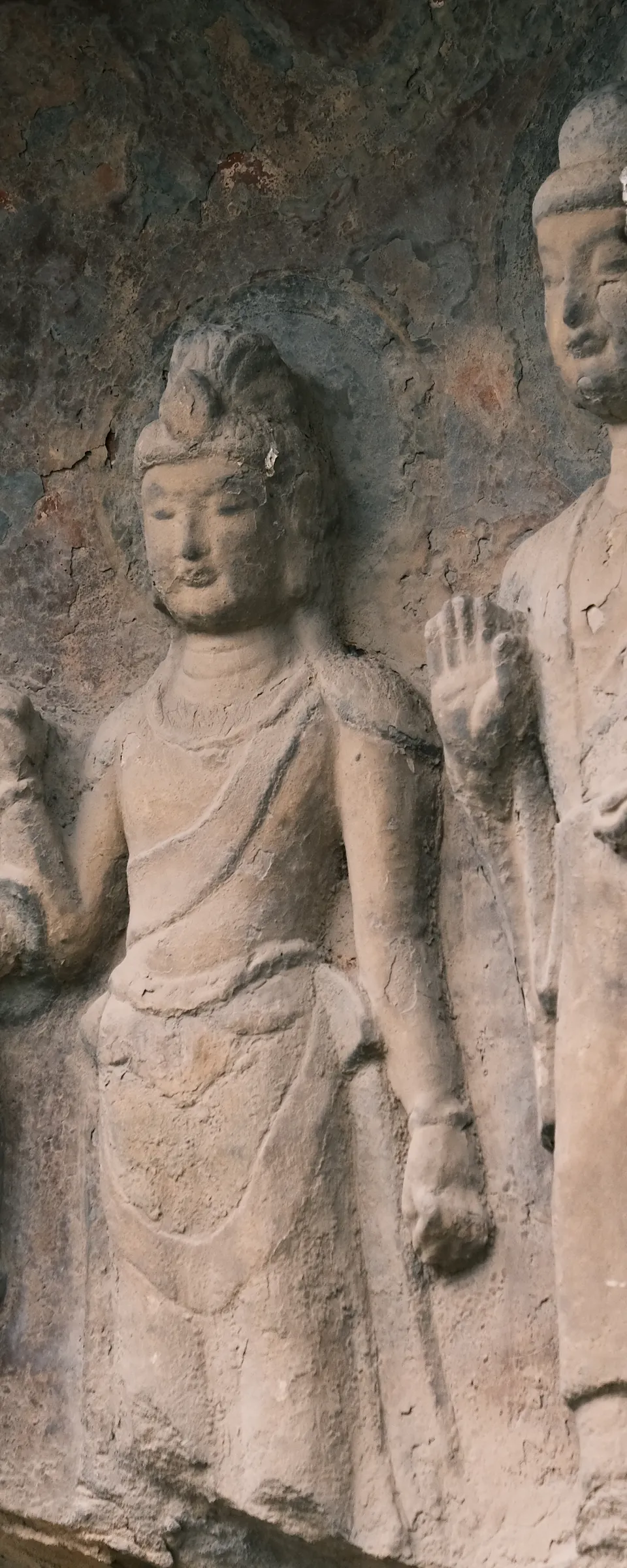
The city is also the starting point for excursions. At Dazu, about two hours away, the Rock Carvings are a UNESCO World Heritage Site and consist of thousands of Buddhist, Taoist and Confucian figures carved into cliffs between the ninth and the thirteenth centuries. Baoding Mountain has the most elaborate scenes, including a huge Reclining Buddha and the Thousand-Hand Guanyin, while Beishan has finer, quieter work. Wulong, to the south-east, has limestone gorges, natural bridges and karst caves, and the old river town of Ciqikou lies on the western edge of the city. Cruises on the Yangtze towards the Three Gorges start from the river quays.
Food is a reason to come in its own right. Chongqing hotpot, cooked in a broth of chillies and numbing Sichuan pepper, is the signature dish, and diners cook meat and vegetables at the table and dip them in sesame oil. Small noodles with spicy sauce, grilled fish and street snacks fill the evenings. The cuisine is hot, though milder broths are available, and a guide helps with ordering and asking for less chilli.
The weather shapes the visit. Summers are very hot and humid, and the city is often called one of the furnaces of China, while winters are cool, damp and foggy. Spring and autumn are the most comfortable seasons. The terrain means a lot of stairs and slopes, so comfortable shoes are important, and taxis and the metro are the easiest way to cover distances.
Getting here is straightforward. The city has a large international airport and high-speed trains to Chengdu in about two hours, and to Guiyang, Wuhan and Xi'an. Many hotels are clustered around Jiefangbei and the riverfront, which suit sightseeing and the evening views. Check visa requirements before you travel, since entry rules have changed for many nationalities in recent years.
Language can be a barrier. English is not widely spoken outside hotels and major attractions, and signs are often in Chinese only. Payment apps are used for most small purchases, and while foreign cards are accepted in more places each year, a guide who can help with tickets, taxis and menus saves time. A private tour with a local driver is a practical way to see the scattered sights.
Chongqing's history adds depth to the modern spectacle. The city was the wartime capital of China during the Second World War, when the government retreated up the Yangtze, and traces of that period survive in air-raid shelters, old residences and museums. It later became a direct-controlled municipality with a population of tens of millions across a vast area, including large rural districts. The rivers, the mountains and the fog gave the city its character, and the old nickname of the mountain city fits it well.
Think about where to base yourself. Jiefangbei and the riverfront put you in the heart of the action, with plenty of hotels, restaurants and viewpoints within walking distance, though the hills make even short trips tiring. The Yuzhong peninsula is the most convenient area for first-time visitors, while Jiangbei, across the river, has newer hotels and views back to the old city. Ride the metro or the Yangtze cableway at least once, as these are part of the local experience.
Plan at least two days. One day covers the main sights of the old city and the evening views, and a second day can go to Dazu or to Wulong. Add a third day if you want to see a hotpot restaurant at leisure, explore Ciqikou or take a river cruise.
Planning a trip to Chongqing?
Our team designs private itineraries for each traveller — no templates, no group tours.
Speak to conciergeExperiences here
Tours & Tickets in Chongqing
Activities and skip-the-line tickets, bookable instantly alongside our curated private experiences.
Hotels, flights and more in Chongqing
Where to stay
Compare hotel rates for your dates with three booking partners.
Getting there
Compare flight prices from your airport before you fix your dates.
Compare flights on AviasalesThese are affiliate links: if you book through them, Excurze may earn a commission at no extra cost to you.
Planning a trip to Chongqing?
Our concierge team knows Chongqing in depth. Tell us your dates and we'll build an itinerary entirely around you — private, unhurried, considered.
Our team responds within 12 hours — usually faster.