

Chiang Mai
Where ancient Lanna culture still breathes
Chiang Mai
Chiang Mai is Thailand's second city in size and its first in cultural depth. The old city is enclosed by a moat and crumbling brick ramparts, and the wider city holds more than three hundred temples, dozens of them inside the walls, many of them active and rarely visited.
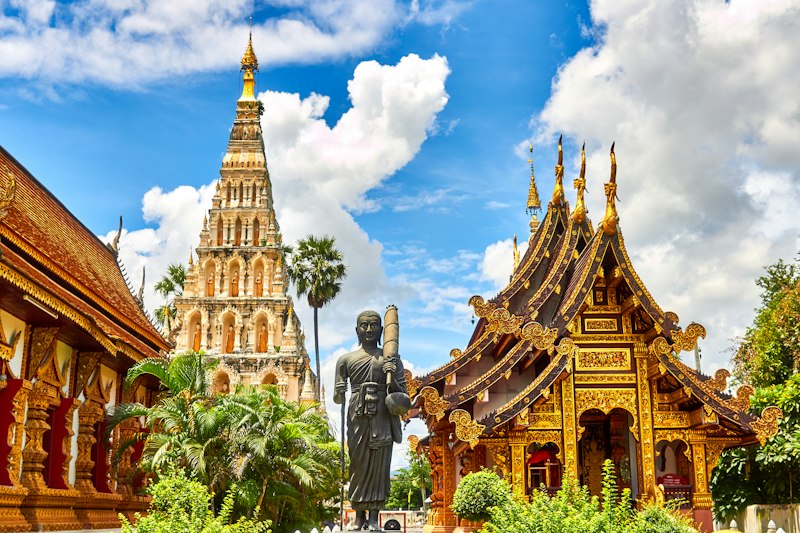
The city was founded in 1296 as the capital of the Lanna Kingdom, centuries before Bangkok existed. That history is visible in the temple architecture: tiered roofs with distinctly northern proportions, Burmese influence in the carvings, and a devotional intensity that Phuket and Pattaya never inherited.
Beyond the walls, the Mae Rim Valley and Doi Inthanon mountain offer hiking through hill tribe villages, elephant sanctuaries operating on genuine rehabilitation principles, and cooking schools where the curriculum has not changed in thirty years.
We work in Chiang Mai with a network of local guides, artisans, and chefs who open doors that standard itineraries don't reach.
Inside the old city, Wat Phra Singh holds some of the finest Lanna murals and one of the most revered Buddha images in the north. Wat Chedi Luang is built around the ruins of a massive brick stupa, partly destroyed by an earthquake in the sixteenth century. Monk chats, informal conversations where monks practise English and visitors ask questions about Buddhism, take place at several temples. Wat Phra That Doi Suthep, on the mountain above the city, is reached by a road that winds up through forest and a staircase flanked by serpent balustrades, and offers views over the valley on clear days.
Food is one of Chiang Mai's great strengths. Khao soi, a curry noodle soup with crispy noodles on top, is the dish most associated with the city. Northern sausages, sai ua, and dipping sauces such as nam prik ong are served in markets and small restaurants. The Sunday Walking Street, which fills the old city's main avenue with stalls, and the Saturday market on Wualai Road, known for silverwork, are good places to try them. Nimmanhaemin Road, west of the old city, is the area for cafés and contemporary restaurants.
The cool season, from November to February, brings the most pleasant weather. From February to April, agricultural burning in the region can cause severe smoke haze, sometimes reaching unhealthy levels; travellers with respiratory conditions should check air quality before visiting. The rainy season, from June to October, brings green landscapes and short, heavy downpours.
The lantern festival of Yi Peng, held on the full moon of the twelfth lunar month, usually in November, fills the sky with floating lanterns and the rivers with candlelit offerings. Lantern releases are now regulated and limited to certain places and times.
Chiang Mai is about an hour and ten minutes by air from Bangkok, or around eleven to thirteen hours on the overnight sleeper train, a memorable way to arrive. Doi Inthanon, Thailand's highest mountain, makes a rewarding day trip, with waterfalls, cloud forest and hill tribe villages, and Chiang Rai, with its White Temple, is around three hours away by road.
Four days is a good minimum: two for the city and its temples, one for Doi Suthep and the surrounding hills, and one for an ethical elephant sanctuary or a cooking class.
The surrounding hills are home to several ethnic minority communities, including the Karen, Hmong and Lahu, whose villages can be visited on treks of one or more days. Choose operators who work with communities and share income with them, and avoid so-called long-neck villages that function mainly as tourist attractions. Treks often include time at waterfalls, rice terraces and bamboo rafting on quiet rivers.
The city's crafts are another highlight. The road towards San Kamphaeng, east of the city, is lined with workshops producing silk, silver, lacquerware, umbrellas and woodcarving. The Wualai area is known for its silversmiths and the silver temple of Wat Sri Suphan. Cooking classes, often held on small farms outside the city, start with a market tour and teach dishes from both central and northern Thailand.
Where you stay changes the experience. The old city is compact and walkable, with small guesthouses and boutique hotels among the temples. The area along the Ping River has larger hotels and riverside restaurants. Nimmanhaemin is lively and modern, popular with long-stay visitors and those who enjoy cafés and nightlife.
Planning a trip to Chiang Mai?
Our team designs private itineraries for each traveller — no templates, no group tours.
Speak to conciergeHotels we trust in Chiang Mai.
These are the properties we book for our own clients — tested, revisited, and chosen for character as much as comfort.

Nimanhaem — central
137 Pillars House
A restored 19th-century teak trading house with 30 suites, all different, all exceptional. The breakfast is the best in Chiang Mai — possibly the best in Thailand. The pool garden is where the city disappears.

Wiang Chai — riverside
Rosewood Chiang Mai
23 pavilions and villas on the Mae Ping River, twelve minutes from the old city. The Thai wellness programme — six-hand massage, traditional herbal compress, private garden soaking pool — is the best in the region.

Old City — Wiang Kaew Road
Rachamankha
Inside the old city walls, designed around a courtyard of frangipani trees. 24 rooms, all with private terrace. The library of northern Thai art history is the hotel's most useful amenity.
Our concierge can negotiate preferred rates and arrange room upgrades at most of these properties.
Areas to explore
Old City
The moated historic quarter — 300 temples, the Sunday Walking Street, and the Tha Phae Gate that has witnessed every major event in northern Thai history.
Doi Suthep
The sacred mountain above the city, crowned by Wat Phra That Doi Suthep — a gilded pagoda visible from the valley floor and a pilgrimage site since 1383.
Elephant sanctuary morning
Doi Suthep at dawn
Old City moat, morning light

Night Bazaar lanterns

Khao Soi noodle soup

Doi Inthanon summit, cloud forest

Wat Chedi Luang interior

Sunday Walking Street, Wualai
Best: November–February — dry season, cooler mountain climate
Avoid: June–September — rainy season, smoke haze in March
Tours & Tickets in Chiang Mai
Activities and skip-the-line tickets, bookable instantly alongside our curated private experiences.
Reading list for Chiang Mai
Essays and guides to deepen your understanding before you travel.


Planning a trip to Chiang Mai?
Our concierge team knows Chiang Mai in depth. Tell us your dates and we'll build an itinerary entirely around you — private, unhurried, considered.
Our team responds within 12 hours — usually faster.