
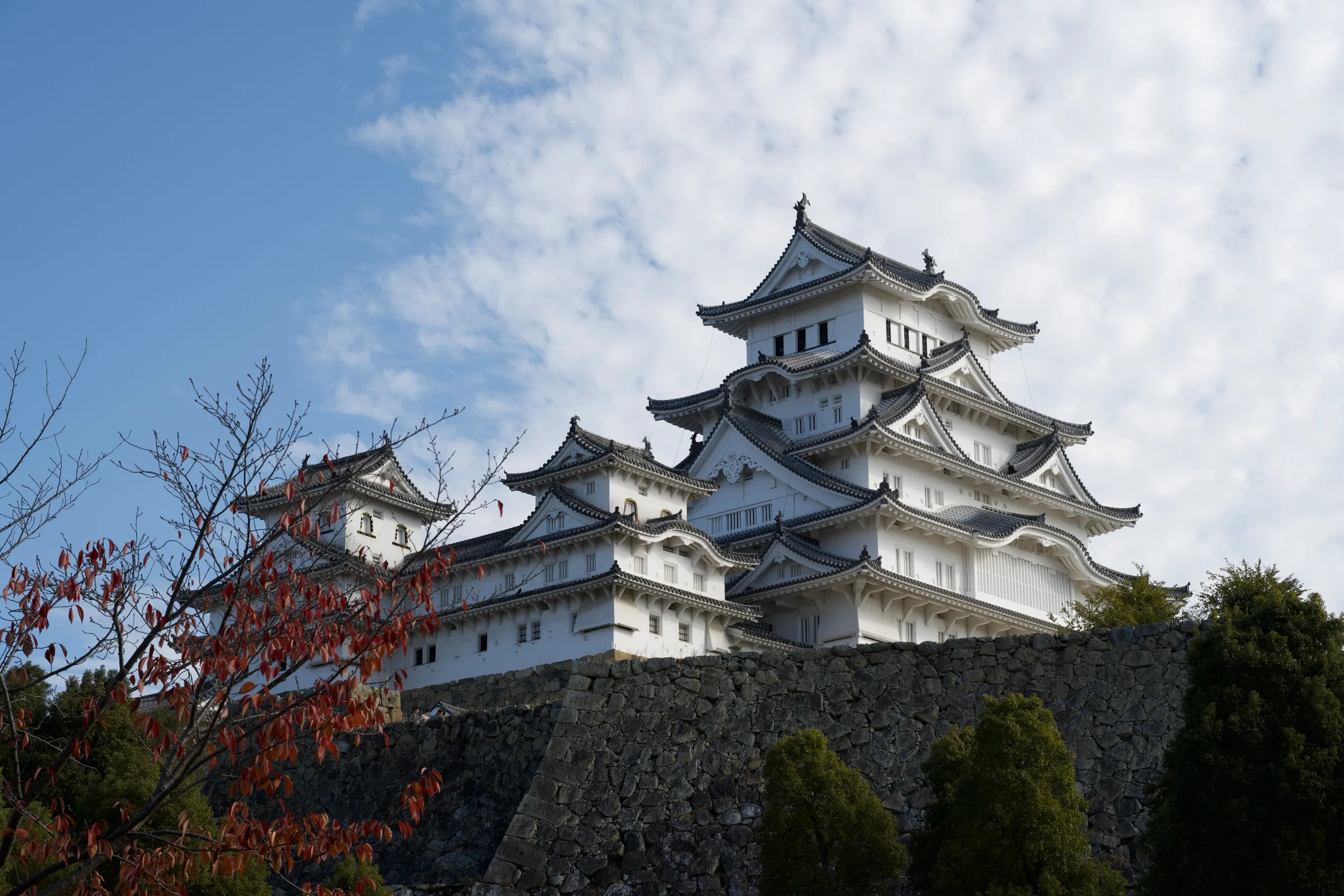
Himeji
Japan's finest surviving feudal castle, a white heron above a quiet garden city
Himeji
Himeji is a city in Hyogo prefecture, about thirty minutes west of Kobe and an hour from Osaka by fast train, and it is known for one building. Himeji Castle, nicknamed the White Heron because of its gleaming white walls and its sweeping roofs, is the best-preserved original castle in Japan and was among the first sites in the country to be listed by UNESCO. It survived wars, earthquakes and the bombing of the city in 1945, and a major restoration completed in 2015 returned its plaster to a brilliant white.
The castle's main keep dates from the early seventeenth century and rises over a maze of gates, corridors and baileys designed to confuse attackers. The route through the complex is deliberately twisting, with narrow openings for archers, hidden stone-drop holes and dead ends. Inside the main keep, wooden stairs rise steeply through six floors to a view over the city, and visitors remove their shoes and walk in socks or slippers. The upper floors are cool even in summer, and the scale of the beams makes a strong impression.
Beside the castle, Koko-en is a garden built in the 1990s on the site of the former samurai residences. It consists of nine walled gardens in the style of the Edo period, each with its own character: a pond with carp, a stream, a tea garden and a bamboo grove. A small teahouse serves matcha and sweets. Together, the castle and the garden make a half-day visit, and many travellers add a walk through the old streets near the station.
Mount Shosha, north-west of the city, is the second reason to come. A ropeway rises from the foot of the mountain to Engyo-ji, a large temple complex founded in the tenth century, with wooden halls built on a hillside among cedar forests. The Maniden Hall, a multi-storey hall perched on a ledge, and the Daikodo, a large lecture hall, appear in films and photographs, and the trails through the forest are quiet. The temple takes an hour or two to explore and has simple vegetarian meals.
The city has its own food. Himeji oden is eaten with ginger soy sauce, a regional twist on the winter stew, and anago, conger eel, is a local favourite in the season. Sweet shops sell white castle-shaped cakes, and the arcade near the station has noodle shops, gyoza restaurants and sushi counters. Sake from nearby breweries is among the best in Japan, and a few offer tastings.
Spring is the most popular time, when cherry blossoms bloom around the castle in early April and the moat reflects the white walls. Autumn brings red maples in the garden and on Mount Shosha, and winter is quiet and clear. Summer is hot and humid, and the castle can be hot and crowded in the middle of the day. The castle is busiest on weekends and holidays, and tickets sell out of the more expensive combined tickets on peak days.
This city is easy to reach by Shinkansen from Osaka, Kyoto and Hiroshima. The station is a ten-minute walk from the castle along a broad avenue, and buses link the city's sights. Many visitors come as a day trip, though a night in the city gives you the castle lit up in the evening and time for a leisurely meal. It also combines well with Kobe, with its harbour and international atmosphere, and with Himeji's neighbour Akashi, famous for its great suspension bridge.
Plan the rest of the visit around the castle's rhythm. The grounds open in the morning and close in the late afternoon, and the final entry to the keep is earlier, so arrive early to avoid disappointment. The castle is a short walk from the station along a wide avenue lined with shops, and a bicycle rental makes it easy to reach other sights such as Koko-en and the museums. After dark, the castle is lit up, and a walk along the moat gives a different view. Himeji's hotels are modest and good value, which suits an overnight stay.
The region offers more. Kobe and Akashi are within half an hour, and the port of Kobe has historic merchant houses, a chinatown and a modern waterfront. Okayama, with its landscape garden, lies to the west, and the island of Awaji can be reached over a great suspension bridge. Himeji is therefore a good stop on the way between Osaka and Hiroshima, and travellers with a rail pass can make it a stopover without changing hotels.
A guide improves the visit. The castle's defences, the history of its lords and the symbolism of its design are not obvious from the buildings, and a guide can explain how the castle worked and point out details such as the loopholes, the gun ports and the carpenters' marks. Plan about half a day for the castle and garden, and a full day if you add Mount Shosha.
Planning a trip to Himeji?
Our team designs private itineraries for each traveller — no templates, no group tours.
Speak to concierge

Tours & Tickets in Himeji
Activities and skip-the-line tickets, bookable instantly alongside our curated private experiences.
Hotels, flights and more in Himeji
Where to stay
Compare hotel rates for your dates with three booking partners.
Getting there
Compare flight prices from your airport before you fix your dates.
Compare flights on AviasalesThese are affiliate links: if you book through them, Excurze may earn a commission at no extra cost to you.
Planning a trip to Himeji?
Our concierge team knows Himeji in depth. Tell us your dates and we'll build an itinerary entirely around you — private, unhurried, considered.
Our team responds within 12 hours — usually faster.