

Hiroshima
A city rebuilt around peace, and a shrine whose gate stands in the sea
Hiroshima
Hiroshima was devastated by the atomic bomb dropped on 6 August 1945, and the city's identity today is built on how it answered that day. The Peace Memorial Park occupies the former commercial and residential district at the centre of the blast. The Atomic Bomb Dome, the skeleton of the former Prefectural Industrial Promotion Hall, stands preserved as it was left, and it has been a UNESCO World Heritage Site since 1996. The Cenotaph frames the Peace Flame and the names of the victims, and the Peace Memorial Museum tells the story through personal belongings and survivor testimony. It is a sombre morning, and most visitors need time afterwards.
The rest of Hiroshima is a working, cheerful regional city. Trams run along the main streets, the castle was rebuilt after the war, and the local food is serious. Hiroshima-style okonomiyaki layers cabbage, noodles and egg on a hot plate rather than mixing them, and oysters from Hiroshima Bay are a local pride. The baseball team, the Carp, has a loyal following.
The second half of the visit is Miyajima, the island officially named Itsukushima, a short train and ferry ride from the city. The Itsukushima Shrine, also a UNESCO site since 1996, is built on stilts over the tidal flats, and its large vermilion torii gate appears to float at high tide and can be approached on foot at low tide. The island's main street is lined with shops selling momiji manju, maple-leaf cakes with sweet fillings, along with grilled oysters and conger eel. Deer wander freely, and Mount Misen, reached by ropeway or on foot, gives views over the Seto Inland Sea. Miyajima charges a small visitor tax, payable in cash.
A day trip covering the Peace Memorial Park, the museum, the shrine and the island is possible but full. Many travellers prefer to see Hiroshima in the morning and Miyajima in the afternoon, and to stay overnight on the island or in the city so that the shrine can be seen in the early morning or evening, when the day-trip crowds have left. Quiet corners exist even on a busy day: Mitaki-dera, a temple in the hills above the city, has moss-covered paths and a small pagoda among the trees.
Spring brings cherry blossom and autumn brings red maple leaves, particularly in the valleys of Miyajima. Summer is hot and humid, and typhoons can disrupt ferries between late summer and early autumn. The bullet train links Hiroshima with Osaka in around an hour and a half and with Tokyo in a little under four hours, so it combines naturally with Kyoto and Osaka on a longer trip.
Two days is enough for both sights without rushing. Stay in central Hiroshima for restaurants and transport, or on Miyajima for a calmer evening after the last ferry has left.
Planning a trip to Hiroshima?
Our team designs private itineraries for each traveller — no templates, no group tours.
Speak to concierge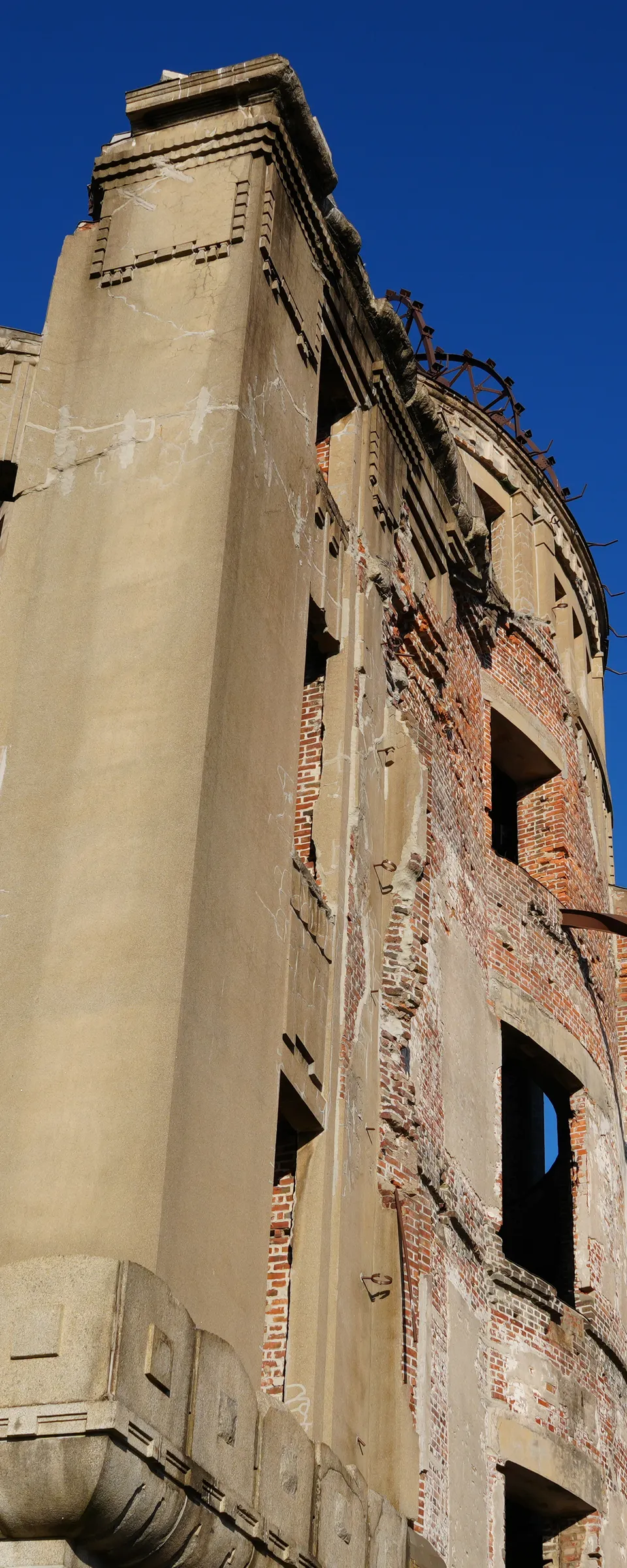

Tours & Tickets in Hiroshima
Activities and skip-the-line tickets, bookable instantly alongside our curated private experiences.
Hotels, flights and more in Hiroshima
Where to stay
Compare hotel rates for your dates with three booking partners.
Getting there
Compare flight prices from your airport before you fix your dates.
Compare flights on AviasalesThese are affiliate links: if you book through them, Excurze may earn a commission at no extra cost to you.
Planning a trip to Hiroshima?
Our concierge team knows Hiroshima in depth. Tell us your dates and we'll build an itinerary entirely around you — private, unhurried, considered.
Our team responds within 12 hours — usually faster.