
Nagasaki
A hillside harbour city shaped by foreign trade, Christian history and the memory of 9 August 1945
Nagasaki
Nagasaki is a port city on the west coast of Kyushu, built on steep hills around a long harbour. For more than two centuries, while Japan was largely closed to the outside world, it was the one place where foreign merchants were allowed to trade, and that history left the city with Dutch, Chinese and Portuguese influences that you do not find elsewhere in the country. It is also the city that was destroyed by the second atomic bomb on 9 August 1945, and the way it remembers that day is central to a visit.
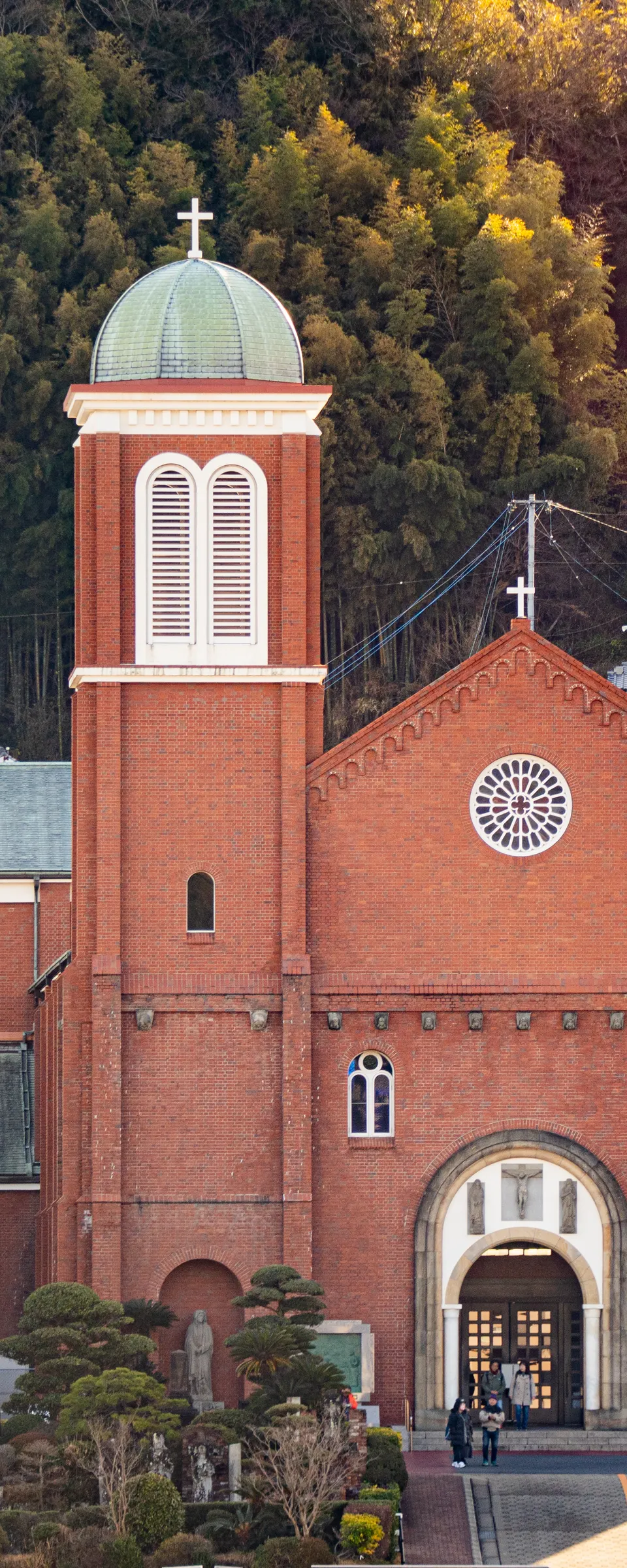
The memory of the bombing is concentrated in the north of the city. The Peace Park, with its large Peace Statue, sits near the Hypocenter Park, where a black column marks the point above which the bomb exploded. A short walk away, the Atomic Bomb Museum shows photographs, melted objects and personal stories, and a surviving wall of the Urakami Cathedral stands as a reminder of the neighbourhood that was once the centre of Japanese Christianity. The mood is quiet and reflective, and most visitors spend at least a morning here.
The older city lies to the south. Dejima, a small artificial island in the harbour, was the Dutch trading post during the period of isolation and has been partly reconstructed with warehouses and merchants' houses. The Spectacles Bridge, a stone arch whose reflection forms two circles in the river, dates from the seventeenth century. Chinatown has been home to Chinese merchants for centuries, and its lantern festival in winter is one of the city's biggest events. The Oura Church, completed in the 1860s and described as the oldest surviving Gothic-style church in Japan, and Glover Garden, a group of Western-style houses gathered around the home of the Scottish merchant Thomas Glover, overlook the harbour from the slopes.
Food reflects the same mixture. Champon is a noodle soup of pork, seafood and vegetables created for Chinese students, and sara udon is crisp fried noodles with a thick topping. Castella, a sponge cake introduced by Portuguese traders, is sold in every souvenir shop, and shippoku is a banquet-style meal that combines Japanese, Chinese and Western dishes. Fresh fish is excellent, and many visitors finish a day at a seafood restaurant by the harbour.
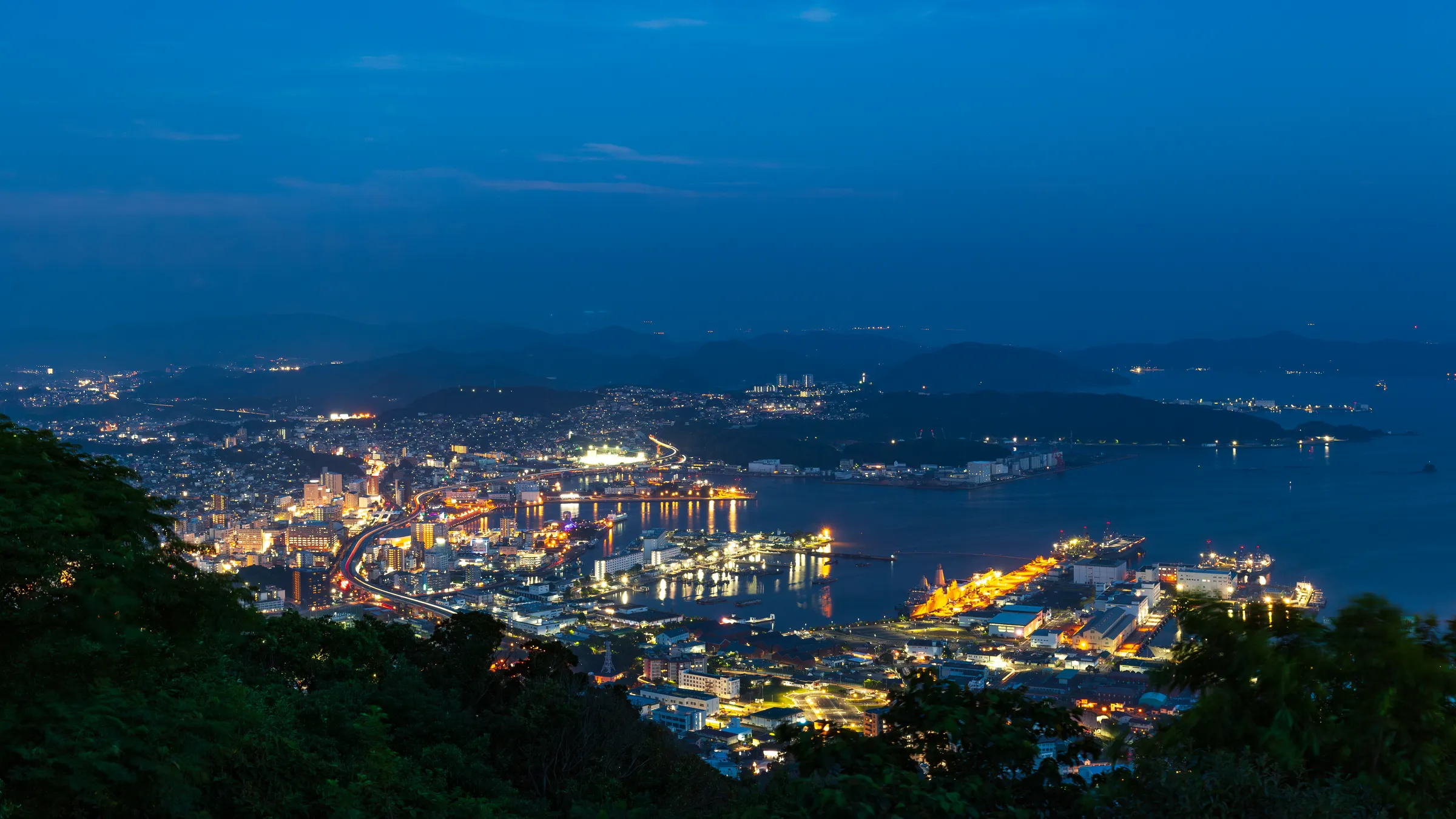
The city is also known for its views. Mount Inasa, reached by a ropeway, offers a panorama of the harbour that is often ranked among the best night views in Japan. Offshore, the abandoned coal-mining island of Hashima, nicknamed Battleship Island, can be visited on boat tours in good weather. Outside the city, a group of churches and villages linked to the hidden Christians who kept their faith in secret for centuries has been listed by UNESCO, and some can be visited on day trips from Nagasaki.
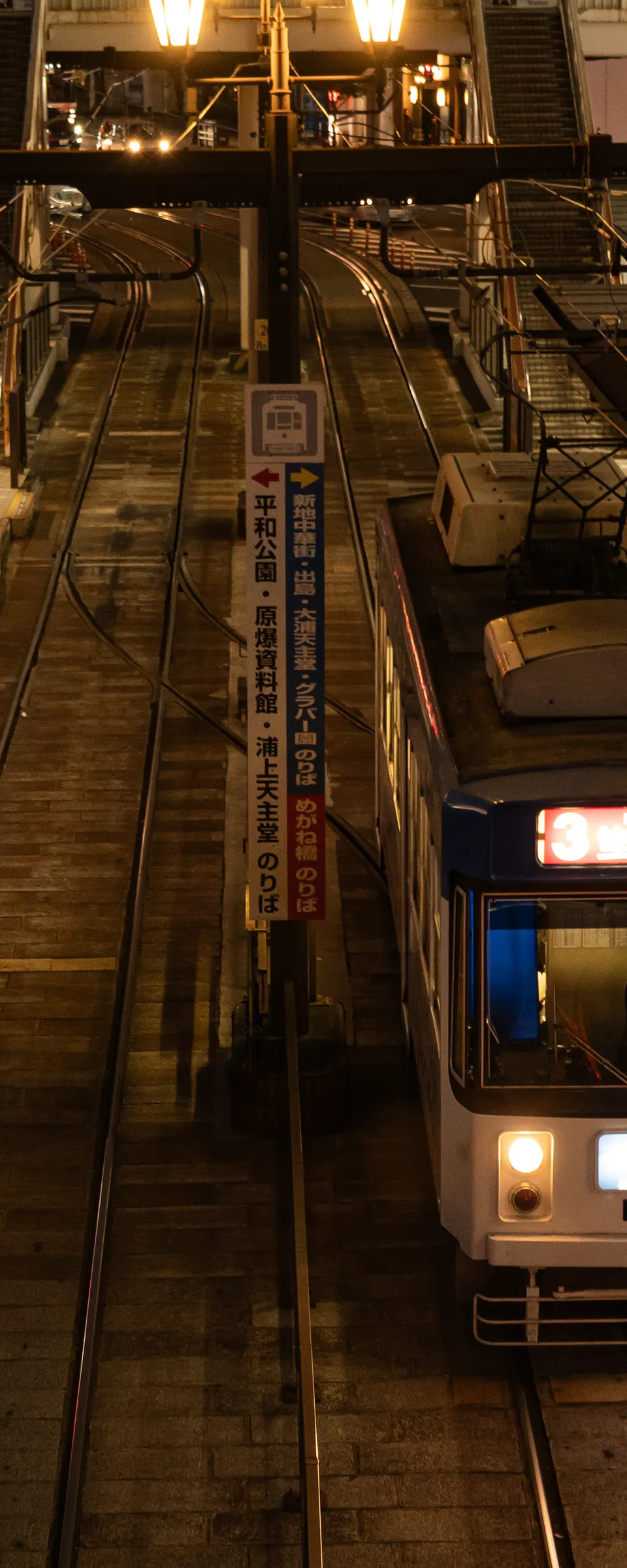
Getting around is part of the charm. A network of trams links the main sights at a low fare, and the streets are steep, with many stairs, so comfortable shoes matter. Taxis are reasonable for short hops, and a private car with a driver or guide is useful for visitors with limited time or mobility, particularly cruise passengers who arrive with only a few hours in port.
The weather in Nagasaki is often rainy, particularly during the rainy season in June and July, and typhoons can disrupt travel in late summer. Spring and autumn are the best seasons. The lantern festival around the Chinese New Year and the Kunchi autumn festival in October bring colour and crowds. Nagasaki is well connected by train and plane to Fukuoka and other cities in Kyushu, and the airport is some distance from the centre.
The wider region adds depth. Hashima, the so-called Battleship Island, was a coal-mining community that housed thousands of residents in concrete apartment blocks until the 1970s, and boat tours from the harbour let visitors land on a restricted part of the island in suitable weather. The Meiji-era industrial sites around Nagasaki are listed by UNESCO alongside other sites in Japan, and the Christian sites in the Goto Islands and the countryside show where the hidden believers lived. These excursions take at least half a day and depend on the sea conditions, so build in margins.
Where to stay is largely a question of convenience. The area around Nagasaki Station is good for trains and shopping, the neighbourhood by Shinchi Chinatown and the harbour puts you close to restaurants and trams, and the hillside near Glover Garden offers views and quiet. Nagasaki is also within reach of Fukuoka by express train in about two hours, which makes it easy to combine with a northern Kyushu trip. Cruise passengers should check that their excursion fits the time in port.
Plan at least a full day to see the main sights, and consider a second day for Mount Inasa at dusk, Hashima or a church excursion. A local guide helps to connect the atomic bomb sites to the story of the city, and to explain the Christian history that is easy to miss on the signs alone.
Planning a trip to Nagasaki?
Our team designs private itineraries for each traveller — no templates, no group tours.
Speak to concierge
Tours & Tickets in Nagasaki
Activities and skip-the-line tickets, bookable instantly alongside our curated private experiences.
Hotels, flights and more in Nagasaki
Where to stay
Compare hotel rates for your dates with three booking partners.
Getting there
Compare flight prices from your airport before you fix your dates.
Compare flights on AviasalesThese are affiliate links: if you book through them, Excurze may earn a commission at no extra cost to you.
Planning a trip to Nagasaki?
Our concierge team knows Nagasaki in depth. Tell us your dates and we'll build an itinerary entirely around you — private, unhurried, considered.
Our team responds within 12 hours — usually faster.