

Tokyo
The world's most orderly chaos
Tokyo
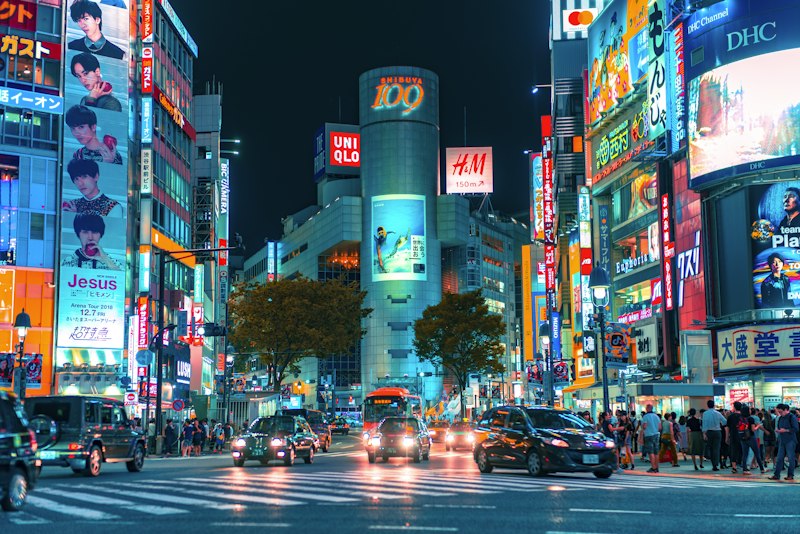
Tokyo contains multitudes. It is the city of the world's finest sushi counters and of tiny bars that have poured drinks for the same regulars for decades. Of vending machines and centuries-old craft workshops. Of silence in a Yanaka temple and noise at a Shibuya crossing where thousands of people move with each change of the lights.
Our Tokyo is the city that doesn't announce itself: the third-floor ramen shop with eight seats and a forty-year recipe, the garden hidden behind a business hotel, the artisan neighbourhood in Sumida where craft potters and textile printers work as they have for generations.
Tokyo rewards the curious and the patient. We give guests both the grand itinerary and the thirty-minute detour that becomes the memory they keep.
Tokyo is best understood as a collection of neighbourhoods rather than a single city. Asakusa, in the northeast, holds Senso-ji, the city's oldest temple, and streets of traditional shops. Yanaka, nearby, survived both the 1923 earthquake and wartime bombing and keeps a village feel, with temples, cemeteries and small craft shops. Shinjuku is the city at full volume, with skyscrapers, department stores and the narrow bar lanes of Golden Gai and Omoide Yokocho. Shibuya and Harajuku are youth culture and fashion; Omotesando, a short walk away, is quieter and more refined. Nakameguro, Shimokitazawa and Kichijoji are where Tokyo residents go for cafés, vintage shops and a slower pace.
Green spaces are more common than first-time visitors expect. Meiji Jingu, a Shinto shrine set in a large forest next to Harajuku, feels far from the city. Shinjuku Gyoen and the East Gardens of the Imperial Palace are ideal for a quiet walk, especially in cherry blossom season. For food, the outer market at Tsukiji still has stalls selling fresh seafood and knives, while the wholesale fish market itself moved to Toyosu in 2018.
Seasons change the city's mood. Spring from late March to early April brings cherry blossom and crowds in every park. Summer is hot and humid, with a rainy season in June and early July. Autumn, from October to early December, is often the most comfortable time, with clear skies and colourful leaves. Winter is cold and dry, with bright days and the clearest views of Mount Fuji from high buildings.
Haneda airport is closer to the centre and generally more convenient than Narita, which is around an hour away by express train. Getting around is simple: a prepaid transport card works on trains, subways and buses, and the network is clean, punctual and signposted in English. Taxis are expensive but useful late at night. Shinjuku and Shibuya are convenient places to stay for nightlife and transport; Ginza and Marunouchi suit those who prefer quieter streets near Tokyo station and the bullet trains.
Four days allows a balanced first visit, with a day trip to Nikko, Kamakura or Hakone if you have longer. Book popular restaurants, museums and observation decks in advance, as many sell out weeks ahead.
A four-day plan might look like this. Start in the east, with Senso-ji at opening time, a walk through Yanaka and dinner around Ueno. On the second day, visit Meiji Jingu early, walk through Harajuku and Omotesando, and end at Shibuya after dark. Give the third day to a museum or garden in the morning and the Tsukiji outer market for lunch, followed by an afternoon in Ginza and an evening in one of the small bars of Shinjuku. On the fourth, choose between a day trip and a slower day in neighbourhoods such as Shimokitazawa or Kichijoji, where Tokyo feels more like a collection of villages.
Food deserves a plan of its own. Tokyo has more acclaimed restaurants than any other city, but some of its best meals are found at tiny counters serving a single dish: ramen, soba, tempura, tonkatsu or yakitori. Department store food halls, known as depachika, are extraordinary for picnics and gifts. Many of the best places are small and fill quickly, so arrive early or reserve ahead where possible.
A few practical points help. Carry some cash, as smaller restaurants and shops may not take cards. Keep noise down on trains, where phone calls are frowned upon. Rubbish bins are rare in public places, so be prepared to carry your litter until you find one.
Planning a trip to Tokyo?
Our team designs private itineraries for each traveller — no templates, no group tours.
Speak to conciergeBefore you go
Mar–May or Oct–Nov
Cherry blossom season and autumn foliage. Both periods are busy but worth it.
Japan eVisa
Free of charge for most nationalities. Apply online 2+ days before travel.
Japanese Yen (JPY)
Cash still essential even in Tokyo. IC card (Suica) for transit and 7-Eleven.
Japanese
English signage on transit. Limited English in neighbourhood restaurants — use Google Translate.
Fly to Haneda (HND)
Or Narita (NRT). Haneda is closer to central Tokyo. Monorail or Airport Express.
4 distinct seasons
Spring and autumn are ideal. Summers hot and humid (38°C+). Winters cold but manageable.
Areas to explore
Shinjuku
Tokyo's most intense neighbourhood — from the serene Shinjuku Gyoen garden to the neon labyrinth of Golden Gai and the memory bars of Omoide Yokocho.
Yanaka
The neighbourhood that survived the earthquakes and the firebombs — Edo-period streets, independent craft shops, and cats. Many cats.
Experiences here

Tours & Tickets in Tokyo
Activities and skip-the-line tickets, bookable instantly alongside our curated private experiences.
Reading list for Tokyo
Essays and guides to deepen your understanding before you travel.


Planning a trip to Tokyo?
Our concierge team knows Tokyo in depth. Tell us your dates and we'll build an itinerary entirely around you — private, unhurried, considered.
Our team responds within 12 hours — usually faster.