
Raja Ampat
Four hundred mushroom-shaped islands scattered across the most biodiverse reef on earth
Raja Ampat
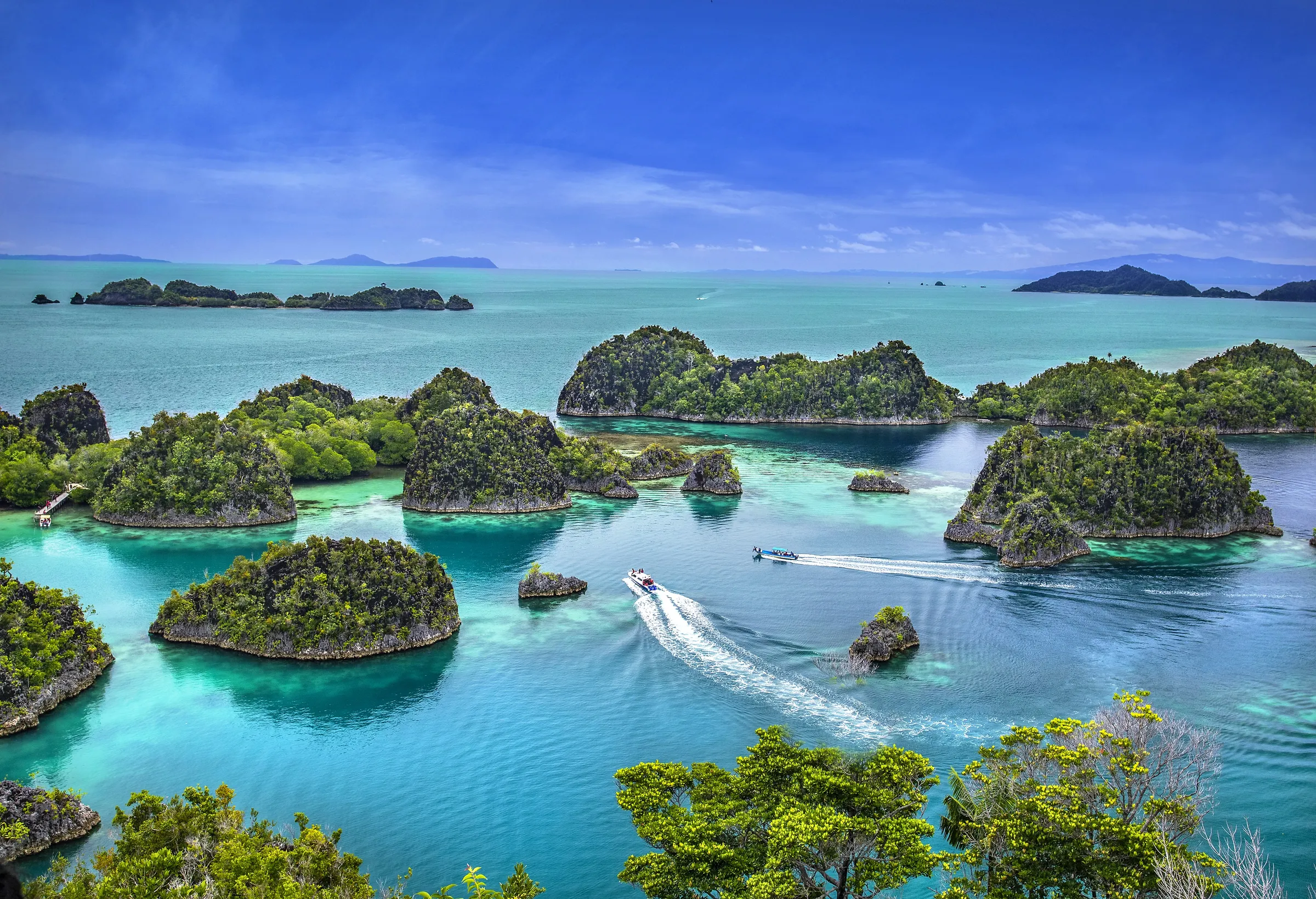
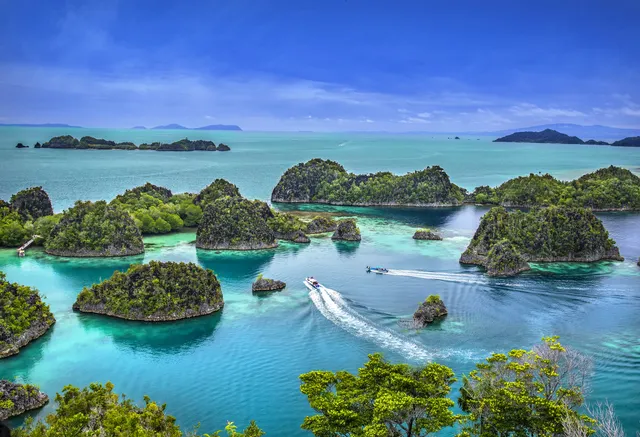
Raja Ampat sits at the centre of what marine biologists call the Coral Triangle, and its reef biodiversity is not a marketing claim, it is a measured fact: more coral and fish species per square kilometre than anywhere else on the planet. The islands themselves, hundreds of small karst outcrops draped in jungle and ringed by shallow turquoise, produce the aerial viewpoint shots that have made Raja Ampat one of the most photographed archipelagos in Asia, mushroom-shaped islets scattered across a lagoon in a pattern that looks deliberately designed.
Getting here requires real effort, a flight to Sorong followed by a boat crossing, which has kept Raja Ampat considerably less developed than comparable island destinations elsewhere in Asia. Liveaboard diving remains the way most serious visitors experience it, though a growing number of homestays on Waisai and Kri Island now offer a land-based alternative for travellers who want the reef without a multi-day boat commitment.
Raja Ampat, whose name means Four Kings, lies off the northwestern tip of New Guinea, in the Indonesian province of Southwest Papua. The four main islands, Waigeo, Batanta, Salawati and Misool, are surrounded by around fifteen hundred smaller islands, cays and shoals. Waigeo and the islands around it are the most accessible from Sorong; Misool, in the south, is more remote and has some of the richest reefs.
All visitors must buy a marine park entry permit, which funds conservation and local community programmes. The permit is usually arranged on arrival in Sorong or Waisai, or through your accommodation.
The best-known viewpoints are Piaynemo, where a wooden staircase climbs to a lookout over a lagoon scattered with small karst islands, and Wayag, further north, reached by a long boat journey and a steep climb. Arborek, a small village with an excellent reef off its jetty, is known for its handicrafts and community-run homestays. On Waigeo, early morning walks into the forest offer the chance to see the red bird-of-paradise and Wilson's bird-of-paradise performing their courtship displays.
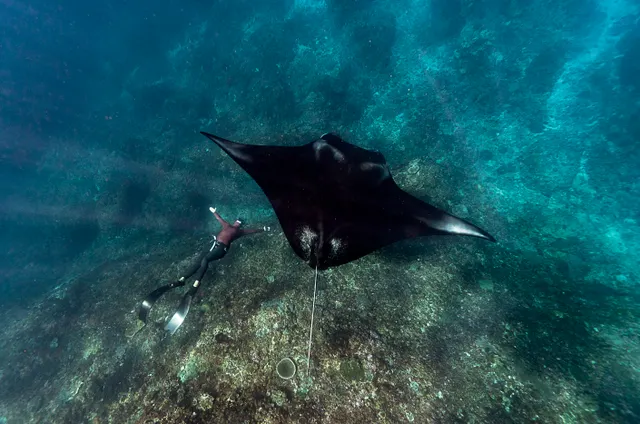
Diving and snorkelling are the main reasons to visit. Many reefs start in shallow water, so snorkellers can see a striking amount of life, including manta rays, reef sharks and wobbegong sharks. Some dive sites have strong currents and are best suited to experienced divers.
The best time to visit is from October to April, when seas are generally calm. From June to September, stronger southerly winds can make crossings rough, especially in the south. Flights to Sorong connect through Jakarta, Makassar or Manado, and the public ferry from Sorong to Waisai takes around two hours.
Plan carefully. Cash is essential, as there are few ATMs outside Sorong and Waisai. Internet and phone coverage are limited or absent on many islands. Consult a doctor about malaria prevention before travelling. Homestays range from simple huts on stilts to comfortable guesthouses, and meals are usually included.
Allow at least a week to make the journey worthwhile, and longer if you want to reach Misool or Wayag.
A ten-day stay might begin with a night in Sorong or a direct transfer to Waisai, followed by four nights at a homestay or resort in the Dampier Strait, the area between Waigeo and Batanta that has some of the best-known dive and snorkel sites. Spend the days snorkelling or diving around Arborek, Cape Kri and Sardine Reef, with an early morning trip to see birds of paradise. Move on to Piaynemo and the lagoons around it for two or three nights, then return to Waisai for the ferry to Sorong, allowing a buffer day before your flight.
Liveaboards remain the best way to reach Misool and Wayag, which are too far for day trips from most bases. Trips usually last seven to twelve nights and focus on diving, with several dives each day.
Raja Ampat's conservation model has been widely praised. Many local communities manage their own reefs, and fishing restrictions have helped fish populations recover. Respect local rules, including restrictions on fishing and the collection of shells and coral, and follow your guides' instructions around reefs and wildlife.
Pack light, as luggage limits on small boats can be strict, and bring reef-safe sunscreen, a torch, insect repellent and any medication you need, as supplies on the islands are limited.
Planning a trip to Raja Ampat?
Our team designs private itineraries for each traveller — no templates, no group tours.
Speak to conciergeExperiences here

Tours & Tickets in Raja Ampat
Activities and skip-the-line tickets, bookable instantly alongside our curated private experiences.
Reading list for Raja Ampat
Essays and guides to deepen your understanding before you travel.

Planning a trip to Raja Ampat?
Our concierge team knows Raja Ampat in depth. Tell us your dates and we'll build an itinerary entirely around you — private, unhurried, considered.
Our team responds within 12 hours — usually faster.