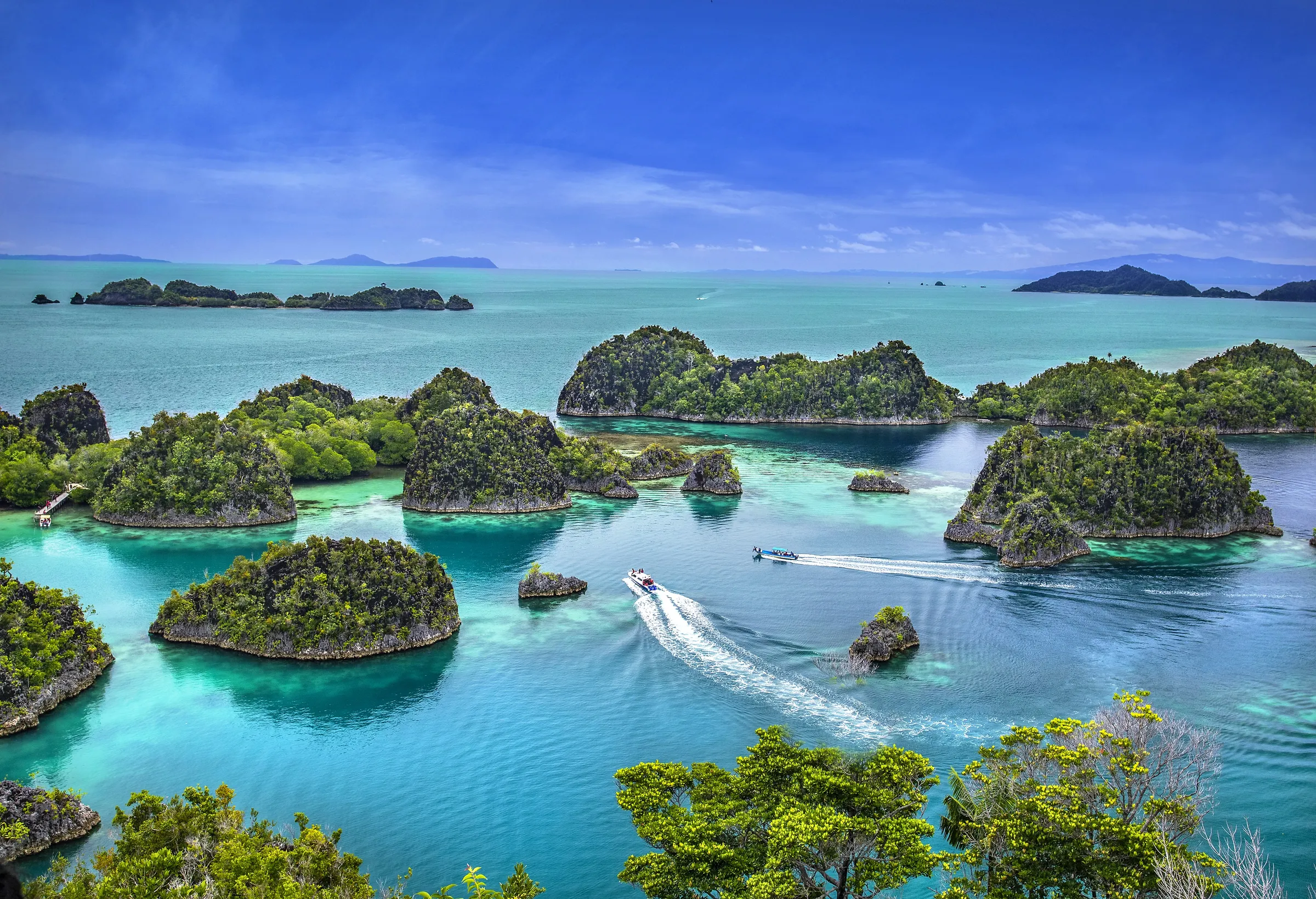
Raja Ampat sits at the centre of what marine biologists call the Coral Triangle, and its reef biodiversity isn't a marketing line, it's a measured fact: more coral and fish species per square kilometre than anywhere else studied on the planet. The archipelago's aerial viewpoint shots, mushroom-shaped karst islets scattered across an impossibly turquoise lagoon, have become some of the most reproduced images in adventure travel, and they're one of the rare cases where the reality matches the photo.
This is the practical version: what it actually takes to get there, which experiences justify the effort, and why Raja Ampat has stayed this untouched while comparable destinations elsewhere in Asia have not.
Why Raja Ampat Still Feels Wild
Getting to Raja Ampat requires real commitment, a flight to Sorong on the Indonesian mainland, followed by a boat crossing that can run anywhere from an hour to most of a day depending on the destination within the archipelago. That friction, unusual for a destination this famous, has deliberately kept large-scale resort development away, no international hotel chains, no cruise ship piers, just a scattering of homestays and dive lodges built at a pace the local community controls. The result is a reef system that has largely avoided the degradation seen at more accessible dive destinations across Southeast Asia.
Piaynemo: The View That Explains the Reputation
The climb to Piaynemo's viewpoint, a wooden staircase up a limestone outcrop, delivers the single most reproduced image of Raja Ampat, dozens of small karst islands scattered across a lagoon so clear the water reads turquoise from height and nearly transparent from the shore. Our Piaynemo Viewpoint and Blue River experience pairs the climb with Kali Biru, a freshwater river running an improbable mineral-blue through the surrounding rainforest, a different register from the archipelago's marine scenery in the same day.
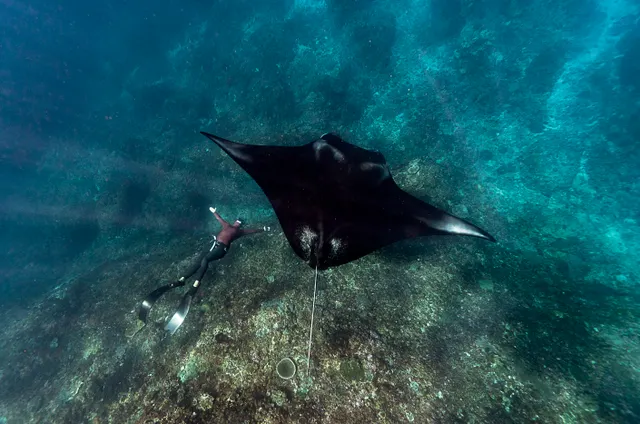
Manta Cleaning Stations: The Underwater Half of the Reputation
Raja Ampat's manta cleaning stations draw reef mantas in numbers that consistently rank among the most reliable manta encounters anywhere in Indonesian waters, gliding slowly enough for both certified divers and confident snorkellers to observe. Our Manta Ray Snorkel and Dive guide covers the specific sites where sightings are most consistent, alongside the wider Coral Triangle reef that surrounds them.
Liveaboard vs Homestay: The Real Trade-Off
Most serious diving visits to Raja Ampat happen aboard a liveaboard, a multi-day boat that covers considerably more of the archipelago's spread-out dive sites than a land-based trip realistically can. Homestays on Waisai and Kri Island offer the land-based alternative, considerably cheaper and more flexible on timing, but limited to the sites within a shorter boat radius. Neither is objectively better, liveaboards suit divers prioritising site variety, homestays suit travellers wanting a slower, village-based experience alongside the diving.
When to Go
October through April brings the calmest seas and best underwater visibility, with peak conditions typically falling between November and March. The archipelago's remoteness means weather windows matter more here than at more sheltered dive destinations, checking specific conditions with a local operator before committing to travel dates is worth the extra step.
What a Realistic Budget Looks Like
Raja Ampat is more expensive to visit than comparable Southeast Asia dive destinations, largely a function of the flight-plus-boat logistics and the deliberately limited accommodation supply. A multi-day liveaboard or a homestay-based trip covering both Piaynemo and a manta site should be budgeted as a premium addition to a wider Indonesia itinerary rather than a quick add-on, the trip rewards travellers who commit real time and budget to it rather than trying to squeeze it into a single rushed day.
Building Raja Ampat Into a Wider Indonesia Trip
Most visitors pair Raja Ampat with a broader Indonesia itinerary rather than visiting it in isolation, Bali as a more accessible starting point, or Komodo for a second wildlife and diving-focused stop within the same country, our Komodo Manta Ray Diving guide covers a comparable, if more accessible, manta encounter for travellers weighing the two against each other. For readers researching Indonesia more broadly before committing to the Raja Ampat leg specifically, Travel Buzzy's Bali budget travel guide is a useful reference point for how the rest of the country compares on cost.
What to Pack for a Trip This Remote
Raja Ampat's limited infrastructure means the usual assumption of buying forgotten gear locally doesn't reliably hold, reef-safe sunscreen, a proper dive computer if diving independently of a guided trip, and enough cash for the entire stay, since ATMs are essentially nonexistent outside Sorong itself, are all worth confirming before departure rather than discovering the gap mid-trip. Homestays typically operate on a simple, often cash-only basis, arranged directly rather than through a booking platform, part of the destination's deliberately slower, less commercialised character.
Frequently Asked Questions
How do I actually get to Raja Ampat? Fly into Sorong on mainland Papua, then take a boat crossing to your specific destination within the archipelago, timing and duration vary considerably depending on which island or dive site you're headed to.
Is Raja Ampat suitable for snorkellers, or only certified divers? Both. Manta cleaning stations and many of the shallower reef sites are snorkel-friendly, though the archipelago's best-regarded dive sites do require open water certification.
How many days should I budget for Raja Ampat? A minimum of four to five days, given the travel time required just to arrive, a week or more allows a unhurried trip covering both Piaynemo and a manta site without rushing.
Is Raja Ampat worth the cost and travel time compared to other Indonesia dive destinations? Yes, for travellers specifically prioritising reef biodiversity and a still-uncrowded experience, Raja Ampat's reef quality remains unmatched elsewhere in Indonesia, a direct result of the same remoteness that makes it more expensive to reach.
Do I need my own dive gear, or can I rent everything locally? Most homestays and liveaboards provide rental equipment, though serious divers often prefer travelling with their own mask, fins, and dive computer given the remoteness and inconsistent rental stock at smaller operators.