
Jeonju
The most Korean city in Korea, with a village of tiled-roof houses, bibimbap at its source and makgeolli by the kettle
Jeonju
Jeonju is a mid-sized city in the southwest of South Korea, in the province of North Jeolla, and it has a reputation that few other places can match. Koreans call it the most Korean city in Korea, and the label is not an exaggeration. This was the ancestral home of the Yi family that founded the Joseon dynasty, which ruled the country for more than five hundred years, and the city has kept a great deal of its traditional architecture, its crafts and its table. It is also a UNESCO Creative City of Gastronomy, and for many visitors the food alone is enough of a reason to come.
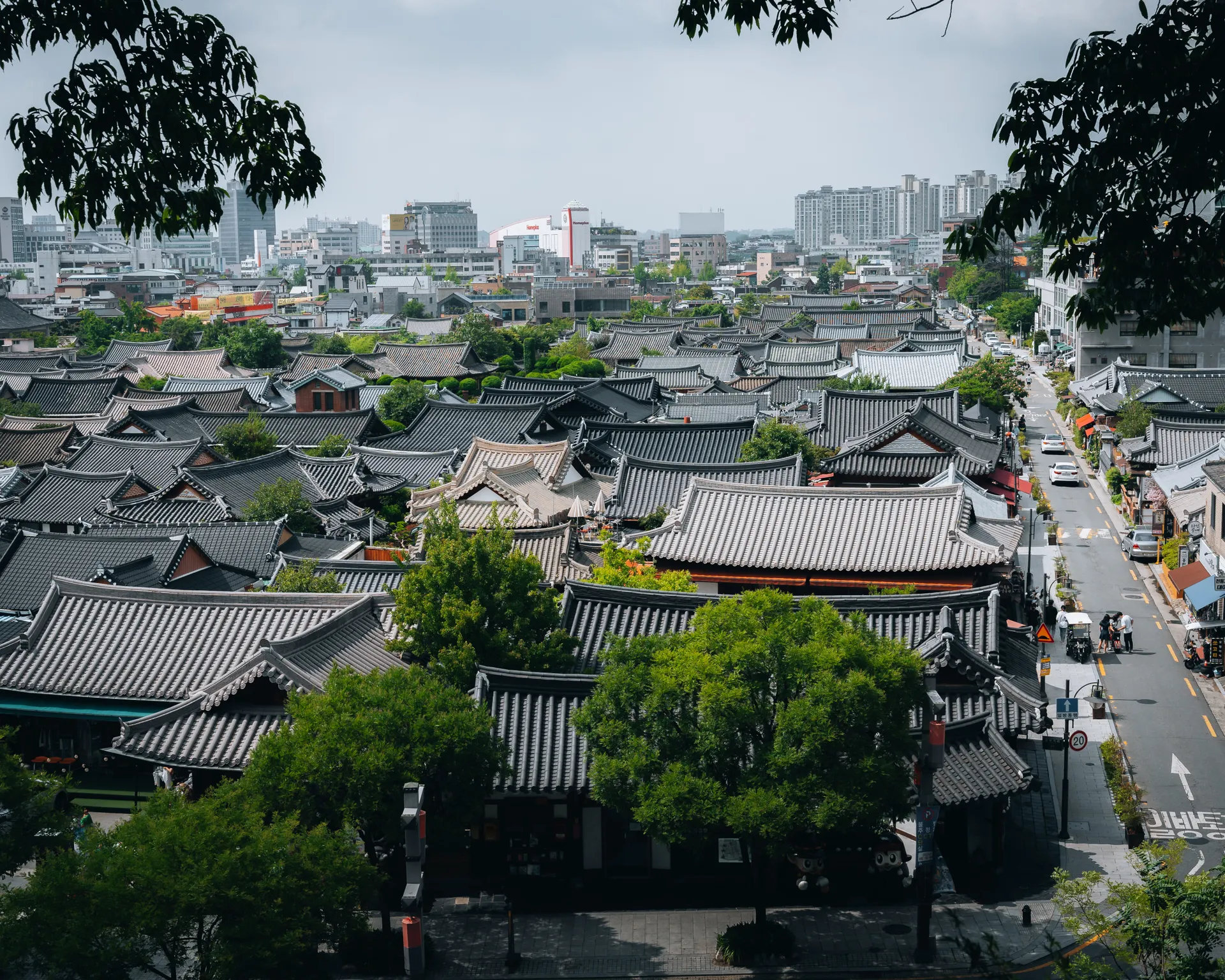
The Jeonju Hanok Village is the heart of the visit. It is a district of around seven hundred traditional houses, with curved tile roofs, wooden pillars and heated floors, that stretches across the old town. The houses were built in the early twentieth century, when local people chose to preserve their own style in the face of the changes of the period, and today they hold guesthouses, tea rooms, craft shops, galleries and small museums. Walking through the narrow lanes is relaxing, and many visitors rent a hanbok, the traditional dress, for the day, which is a popular activity in the village.
The village is surrounded by historic buildings that make the stroll richer. Gyeonggijeon Shrine, at the edge of the quarter, holds a portrait of Taejo, the founder of the dynasty, and a small museum of royal relics. Jeondong Cathedral, with its red brick walls and Romanesque and Byzantine details, was completed in 1914 on the site where early Catholics were executed in the eighteenth century, and it is one of the most beautiful churches in the country. Omokdae, a pavilion on a hill, gives a view of the roofs, and the Jeonju Hyanggyo, an old Confucian school, is lovely in autumn.
Food is the great attraction. Jeonju bibimbap, rice mixed with vegetables, egg, chilli paste and often raw beef, is the most famous dish of the city, and it is said to be the origin of the version eaten across Korea and the world. Local restaurants serve it in brass bowls with dozens of side dishes, and a full table meal is a memorable experience. Kongnamul gukbap, a soup of rice and bean sprouts, is a favourite breakfast, and the street food of the Nambu Market and the hanok village includes skewers, rice cakes and the sweet pastries for which the city is known.
Drink has its own culture here. Makgeolli, the milky rice wine, is served in Jeonju in a custom that has no equal elsewhere in Korea: in the makgeolli alleys of Samcheon-dong, an order of a kettle of the wine comes with a table full of dishes, and each additional kettle brings more dishes. The result is a generous meal in a lively atmosphere, and it is a social event as much as a way to drink. Moju, a traditional herbal liquor, can be tried at workshops in the hanok village, and many places also offer a tea ceremony.
The city has deep traditions in craft and music. Hanji, the traditional paper made from mulberry bark, is a local speciality, and museums and workshops show how it is made and used. The city is also the home of pansori, a form of storytelling through song, which is performed during an annual festival in autumn, and of a well-known international film festival that takes place each spring. Jaman Mural Village, a hillside neighbourhood with painted walls, adds a colourful modern touch.
The surroundings offer pleasant excursions. Mount Maisan, the Horse Ears Mountain, is known for the stone pagodas at the Tapsa Temple, built by a hermit with unmortared stones, which are one of the most unusual sights in the country. Deokjin Park has a lake full of lotus flowers in summer, and the Ajung Lake and its rail bike offer a family activity. Damyang, with its bamboo forest and traditional gardens, and the port city of Gunsan, with its history of the early twentieth century, are within reach by car.
Getting to Jeonju is simple. The KTX high-speed train connects it with Seoul in under two hours, and express buses take a little longer. The city has a small centre, and the hanok village, the market and the main sights can be reached on foot or by a short taxi ride. Spring and autumn are the best seasons, with mild temperatures and colour in the trees. Summer is hot and humid, and winter is cold, though the hot food is very welcome. Many visitors stay overnight in a hanok guesthouse, sleeping on a heated floor, which adds to the experience.
One day is enough for the village, the shrine, the cathedral and a regional meal, and two days allow Maisan or Damyang and an evening in the makgeolli alleys. The Jeonju experiences on Excurze include a private slow walking tour with a guide born and raised in the city, and a private taxi tour with a car and a driver for a more flexible day. Our concierge can combine them with Seoul, Gyeongju and Busan, and arrange the trains, the hanok stay and the restaurant bookings for a journey through the culinary heart of Korea.
Planning a trip to Jeonju?
Our team designs private itineraries for each traveller — no templates, no group tours.
Speak to concierge

Hotels, flights and more in Jeonju
Where to stay
Compare hotel rates for your dates with three booking partners.
Getting there
Compare flight prices from your airport before you fix your dates.
Compare flights on AviasalesThese are affiliate links: if you book through them, Excurze may earn a commission at no extra cost to you.
More to explore in South Korea

Seoraksan
Korea's granite peaks and east coast fishing port, and a view across the DMZ
Seoul
An ancient capital rebuilt at speed, and better for it

Andong
The spiritual heart of Korea, with a river-bend village, Confucian academies, a mask dance and braised chicken
Busan
Korea's coastal second city, unhurried and unmistakably itself


Planning a trip to Jeonju?
Our concierge team knows Jeonju in depth. Tell us your dates and we'll build an itinerary entirely around you — private, unhurried, considered.
Our team replies to every enquiry by email.