
Kumamoto
A great castle with curved stone walls, a garden in the shape of an old road and the rim of the Aso volcano close by
Kumamoto
Kumamoto is the main city of central Kyushu, and for most visitors it is the gateway to Mount Aso, to the hot springs of Kurokawa and to the islands of Amakusa. It deserves a stop of its own. The castle, the gardens and the food are among the best in the south of Japan, and the city has a relaxed scale, with trams on the main streets and a mascot, the black bear Kumamon, who appears on everything from souvenirs to taxis. The people are known for being straightforward and warm, and the city has become more welcoming to travellers each year.
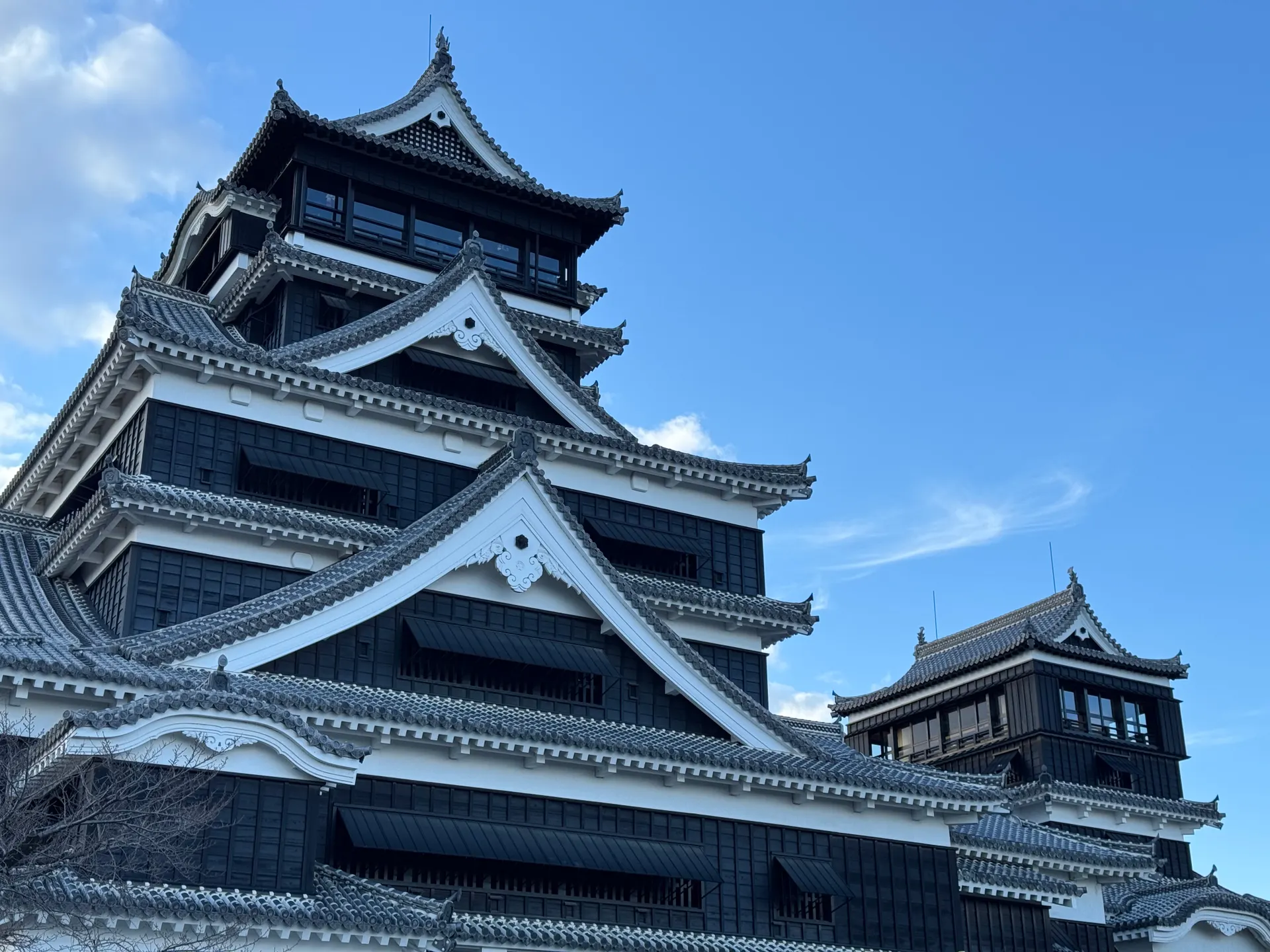
Kumamoto Castle is one of the great castles of Japan, and it is often counted with the castles of Nagoya and Osaka as one of the three most famous. It was built in the early seventeenth century by Kato Kiyomasa, a general who was also an expert in fortification. The stone walls are the highlight, with a curve that becomes steeper towards the top, a design known as musha-gaeshi, or warrior-return, that was meant to stop attackers from climbing. The castle was badly damaged by the earthquakes of 2016, and its restoration has been a long public effort. The main keep has reopened, and work continues on other parts of the site.
Suizenji Jojuen is the city's second great sight, a garden created in the seventeenth century by the Hosokawa family, the lords of the domain after the Kato clan. It is laid out around a large pond, and its design recreates the landscape of the old Tokaido road between Kyoto and Edo, with a small hill standing for Mount Fuji, a bridge and a stretch of shoreline. The garden is quiet and well kept, and the tea house beside the pond serves matcha and sweets. A shrine inside the grounds adds to the atmosphere, and the spring water that feeds the pond gives the place its name.
Several smaller sights reward a short visit. The former residence of the Hosokawa family, the house where the writer Natsume Soseki lived for a time, and the home of Lafcadio Hearn, who taught in the city and wrote about Japan, show the literary side of Kumamoto. The Sakuranobaba Josaien area, at the foot of the castle, is a reconstructed street of shops and restaurants that sell local specialties and crafts, and the covered shopping arcades of Shimotori and Kamitori are the centre of city life, busy until late.
The food of Kumamoto is memorable. Basashi, thin slices of raw horse meat served with ginger and garlic, is the signature dish, and the region is also known for karashi renkon, lotus root stuffed with mustard and fried, for Kumamoto ramen, with a rich pork-bone broth topped with garlic oil, and for taipien, a hearty noodle soup of Chinese origin. The prefecture produces large quantities of tomatoes, watermelons and strawberries, and its beef, called akaushi, is raised on the grasslands of Aso. Local shochu and sake complete the picture.
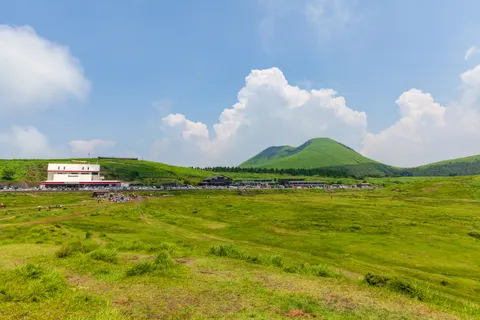
From the city, the countryside is close. Mount Aso, a hot and vast volcanic caldera, is about an hour and a half away by road, with grasslands, active craters and long views. Kurokawa Onsen, a hot spring village in the hills, is known for its wooden bathhouses and a ticket that lets you try several baths. The Amakusa islands, reached by road bridges and ferries, offer coast, churches linked to the hidden Christians of the past and fresh seafood. Takachiho Gorge, across the border in Miyazaki, is another popular day trip.
Getting to Kumamoto is simple. The Kyushu Shinkansen connects it with Fukuoka in about half an hour and with Kagoshima in about forty minutes, and Kumamoto Airport has flights from Tokyo, Osaka and other cities. In the centre, the tram and the buses reach the main sights, and walking is pleasant if you do not mind slopes near the castle. Spring brings blossoms to the castle grounds, and autumn colours the gardens. Summer is hot, humid and rainy at the start, and winter is cold at night but mostly clear.
A day gives time for the castle, the garden, the old houses and a regional meal. A second day adds the Aso caldera or a hot spring. The sights are spread across the city, and a licensed guide helps to explain the history of the clans and the rebuilding after the earthquakes, which gives the visit more meaning. The Kumamoto experiences on Excurze include a customised private walking tour with a licensed guide, and a private day in the Aso region with a shrine visit and a washi paper workshop.
Our concierge can connect Kumamoto with Fukuoka, Nagasaki and Kagoshima, and arrange transport, hotels and restaurant bookings across Kyushu. For travellers who want to understand the south of Japan, a few days based in Kumamoto, with day trips in several directions, make an excellent and unhurried introduction.
Planning a trip to Kumamoto?
Our team designs private itineraries for each traveller — no templates, no group tours.
Speak to concierge
Hotels, flights and more in Kumamoto
Where to stay
Compare hotel rates for your dates with three booking partners.
Getting there
Compare flight prices from your airport before you fix your dates.
Compare flights on AviasalesThese are affiliate links: if you book through them, Excurze may earn a commission at no extra cost to you.
More to explore in Japan
Kyoto
Where ancient Japan still breathes

Matsue
A castle town on a lake in Shimane, with an original keep, samurai lanes, a writer's house and famous sunsets

Matsumoto
A black castle city at the foot of the Japanese Alps, and the gateway to the Kamikochi valley
Mount Fuji
Japan's sacred summit at first light


Planning a trip to Kumamoto?
Our concierge team knows Kumamoto in depth. Tell us your dates and we'll build an itinerary entirely around you — private, unhurried, considered.
Our team replies to every enquiry by email.