

Nara
Japan's first permanent capital, with a bronze Great Buddha, mossy lanterns and deer that bow for biscuits
Nara
Nara is a small city with an outsized place in Japanese history. In 710 the court built its first permanent capital here, and for most of the century that followed this was where Japan's rulers, monks and craftsmen lived. The capital moved on in 784, first to Nagaoka and then to Kyoto, and Nara slipped into a long quiet that left its temples largely undisturbed. Today the old sites sit close together inside and around a large park, and a visit is easy to fit into a single day from Kyoto or Osaka.
The best-known building is Todai-ji, a temple founded in the eighth century under Emperor Shomu, who wanted a great Buddha to protect the country. The bronze statue sits inside the Great Buddha Hall, which is among the largest wooden buildings in the world even though the present hall is smaller than the original. At the Nandaimon Gate in front, two huge wooden guardian figures, the Kongo Rikishi, glare down at visitors. The scale is the point: the hall and its statue are meant to overwhelm, and they still do.
A short walk away, Kofuku-ji is the other great temple of the old capital. Its five-storied pagoda is one of the symbols of the city, and the temple's collection includes the Statue of Ashura, a sculpture with three faces that is a National Treasure and one of the best-loved pieces of Buddhist art in Japan. Further east, in the forest at the foot of the hills, Kasuga Taisha is the main shrine of the area. It was founded in the eighth century, painted a bright vermilion, and lined with thousands of stone and bronze lanterns that visitors have donated over the centuries. On the festival days when the bronze lanterns are lit, the approach turns into one of the most atmospheric walks in Japan.
The deer are the reason that many people remember Nara. Several hundred of them live in Nara Park, and local tradition treats them as messengers of the gods of Kasuga Taisha. Vendors sell deer crackers, shika senbei, and the animals have learned to bow their heads when they see one. They are wild, and they will nibble maps, tickets and the paper bag in your pocket, so keep your belongings closed and do not tease them. Most visitors find the experience charming rather than alarming, particularly early in the morning when the park is quiet.
These and several other sites are grouped as the Historic Monuments of Ancient Nara, a UNESCO World Heritage listing made in 1998. The list also includes Yakushi-ji, Toshodai-ji, Gango-ji, the Heijo Palace site and the Kasugayama Primeval Forest. Horyu-ji, the temple complex a short train ride to the south, is listed separately and holds some of the oldest wooden buildings in the world. If you have more than a day, it is well worth the detour.
Naramachi, the old merchant quarter south of Kofuku-ji, adds a different texture. Its narrow lanes are lined with wooden townhouses, some now turned into cafes, craft shops and small museums, and the area is pleasant to wander for an hour after the temples. Nara is also known for kakinoha-zushi, sushi wrapped in persimmon leaves, for narazuke pickles, and for the mochi that is pounded to order by quick-armed vendors in the shopping streets. The prefecture has a long tradition of sake brewing too, which the local restaurants are happy to explain.
Getting here is simple. Trains from Kyoto take about 45 minutes, and Kintetsu trains from Osaka-Namba take roughly the same, which is why Nara is so often combined with a Kyoto or Osaka stay. Most of the main sights are within walking distance of Kintetsu Nara Station, and Nara Park is large enough that a full day on foot is realistic. Taxis are easy to find, and a licensed guide or a driver makes the longer walks to Kasuga Taisha and the museums more comfortable.
The best seasons are spring, when cherry blossoms frame the temples, and autumn, when the maples around Kasuga Taisha and the park turn red. Summer is hot and humid, and winter is cold but clear, with fewer visitors. Weekends and national holidays are busy, so an early start, before the tour groups arrive from the larger cities, makes a real difference. The lantern festivals, held at Kasuga Taisha in early February and mid-August, are particularly memorable, though they draw large crowds.
Allow a full day to see the main sights without rushing, and more if you want to include Horyu-ji or Naramachi at a gentle pace. Comfortable shoes matter, since the park and the temple grounds involve a lot of walking on gravel and stone. Entrance fees are small but they add up across the temples, and many sites close in the late afternoon, so plan the order of the day with that in mind.
The experiences listed for Nara on Excurze are built around a licensed guide, since the stories behind the statues and shrines are what turn a pleasant walk into a real visit. Most of them are walking tours that can be customised, and a private day that links Nara with Kyoto is available for visitors who prefer to see both cities with a driver. If you would rather design a longer stay around the old capital, our concierge can combine Nara with Kyoto, Osaka and the Kii mountains, so that the trip has room for quiet mornings as well as sights.
Planning a trip to Nara?
Our team designs private itineraries for each traveller — no templates, no group tours.
Speak to concierge
Hotels, flights and more in Nara
Where to stay
Compare hotel rates for your dates with three booking partners.
Getting there
Compare flight prices from your airport before you fix your dates.
Compare flights on AviasalesThese are affiliate links: if you book through them, Excurze may earn a commission at no extra cost to you.
More to explore in Japan

Nikko
Gilded shrines in a cedar forest, a 97-metre waterfall and a mountain lake, two hours north of Tokyo
Okayama
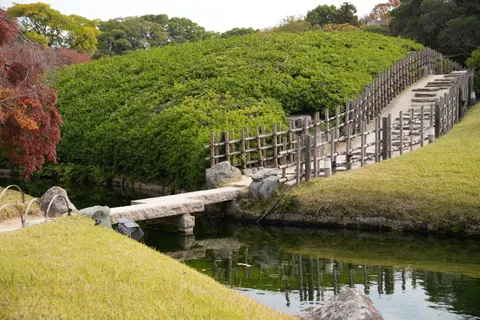
The Land of Sunshine, with a black castle, one of Japan's three great gardens and the canal town of Kurashiki
Okinawa
Japan's subtropical islands, a world apart from Tokyo and Kyoto
Osaka
Japan's kitchen, unbuttoned and unapologetic


Planning a trip to Nara?
Our concierge team knows Nara in depth. Tell us your dates and we'll build an itinerary entirely around you — private, unhurried, considered.
Our team replies to every enquiry by email.