
Xiamen
A seaside city in Fujian, with a car-free island of old villas, Tang-dynasty temples and earthen fortresses in the hills behind
Xiamen
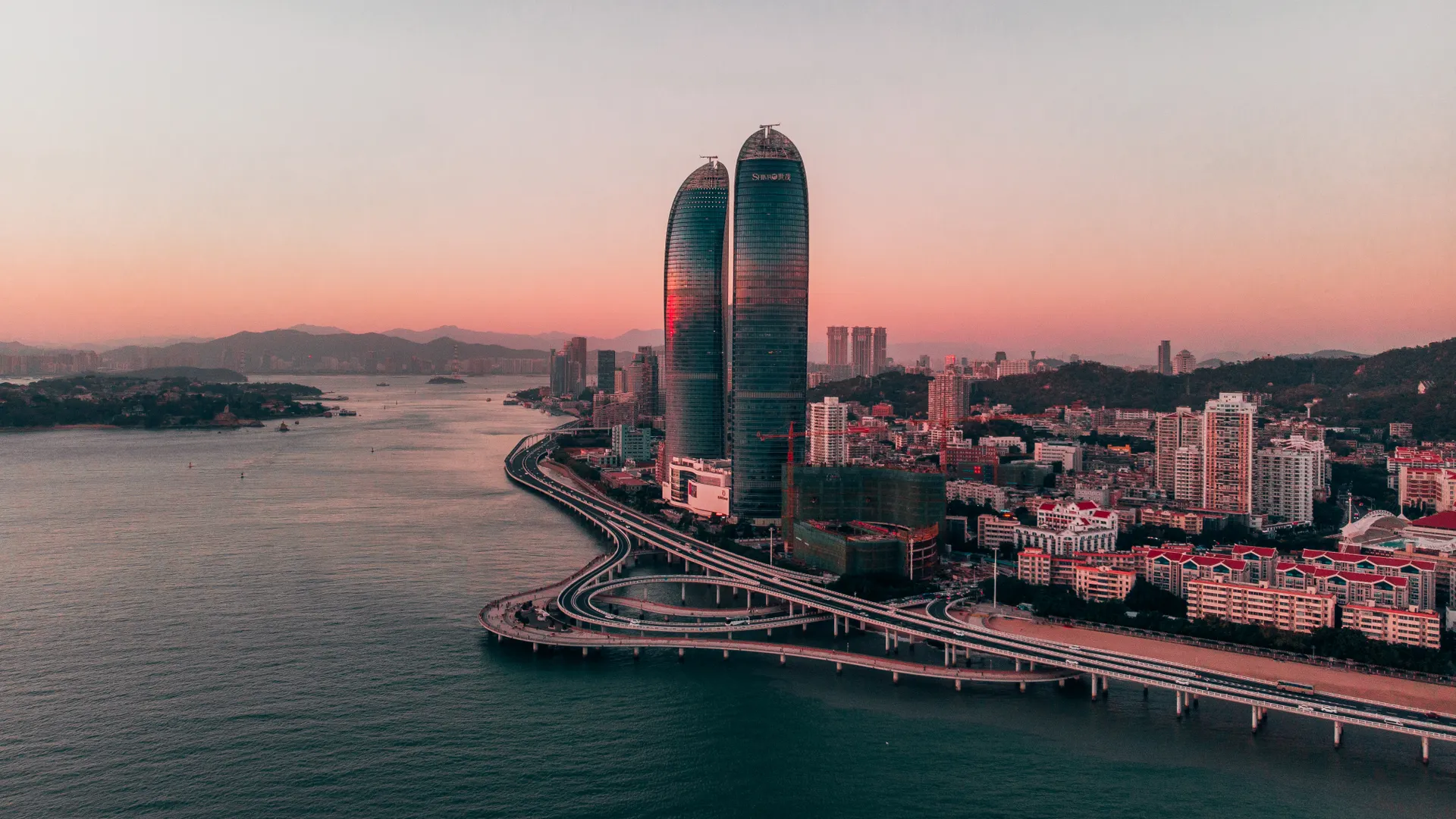
Xiamen is a port city on the southeast coast of China, in Fujian Province, facing Taiwan across a narrow strait. It is one of the most pleasant large cities in the country for a visitor: green, relaxed, close to the sea and with a mild climate. It was one of the first four special economic zones opened in 1980, and it has grown into a modern city of towers and bridges. Yet it keeps the character of an old trading port, with colonial villas, Hokkien culture, a tea tradition and a table that rewards a curious eater.
Gulangyu is the city's gem. The small island, a few minutes by ferry from the main harbour, was an international settlement from the middle of the nineteenth century, and it is now a UNESCO World Heritage Site that is closed to cars. Its lanes wind between villas in a mix of styles, with European columns, Chinese roofs and Southeast Asian verandas, and the sound of pianos floats from the windows, since the island has a long musical tradition. The Shuzhuang Garden, a seaside park, holds the only piano museum in China, and Sunlight Rock, the highest point of the island, gives a view of the whole coast.
The city has other sights that merit a visit. Nanputuo Temple, at the foot of a hill beside the sea, has origins that date back to the Tang dynasty, and its halls hold Buddhist relics and a vegetarian restaurant that is popular with locals. Hulishan Fortress, built in the late nineteenth century to guard the harbour, preserves its gates, walls and a huge cannon, and combines elements of traditional and Western design. Xiamen University, one of the most attractive campuses in China, sits on the shore and is open to visitors who register, with its buildings in a blend of Chinese and Southern European styles.
The seafront is a good place to relax. Huandao Road, a coastal route, runs for many kilometres with a cycle lane and views of the sea, and the beaches near the university offer a place to swim in summer. Zengcuoan, a former fishing village that has become a district of cafes and craft shops, is popular with young visitors, and the old streets of the Shapowei area, near the harbour, are known for their art studios and food. At night, the lights along the waterfront and the bridges make a pleasant background for a walk.
The cooking of Fujian, called Min cuisine, uses fresh seafood and delicate broths. In Xiamen you will find oyster omelettes, a dish of eggs, oysters and sweet potato starch, satay noodles in a rich peanut broth, sea worm jelly, a local delicacy that is more appealing than its name suggests, and peanut soup with sweet rice balls for dessert. Street food and night markets are good places to try them, and the tea culture is part of daily life: Tieguanyin, the famous oolong, comes from the nearby county of Anxi, and tea houses throughout the city serve it in the traditional gongfu style.
The best day trip from Xiamen is to the Fujian Tulou. These are the huge earthen buildings of the Hakka people, built in circles, squares and ovals, with walls up to a metre thick and rooms for dozens of families around a central courtyard. A group of them has been listed by UNESCO, and the most photographed cluster, known as the Four Dishes and One Soup, is arranged in a formation of five buildings on a terraced hillside. Visitors can walk inside, see the communal life of the buildings and eat in the villages. The drive from the city takes about two hours each way.
Getting to Xiamen is easy. The city has an international airport with flights from across Asia and from other Chinese cities, and high-speed trains link it with Fuzhou, Shenzhen and Guangzhou. Entry rules for foreign visitors change from time to time, so check the current visa conditions before you travel. Inside the city, the metro, buses and taxis cover the main areas, and the ferry to Gulangyu leaves from a terminal near the centre. Tickets for the ferry are often sold in advance, and the island limits the number of daily visitors, so plan ahead.
October to December and March to May are the pleasantest months, when the weather is mild and the air is clear. Summer is hot and humid, and the typhoon season runs from July to September. Winters are mild, with occasional damp days. Allow a full day for Gulangyu and the mainland sights, and a second day for the tulou or the coast.
The Xiamen experiences on Excurze include a private day that links Gulangyu with South Putuo Temple, Hulishan Fortress and the seafront, and a private day trip to the Fujian Tulou and the ancient village of Yunshuiyao. Our concierge can combine them with Hong Kong, Macau and Guangzhou, or with a trip across to Taiwan, and arrange the trains, the hotels and the meals for a journey along the southern coast.
Planning a trip to Xiamen?
Our team designs private itineraries for each traveller — no templates, no group tours.
Speak to concierge

Hotels, flights and more in Xiamen
Where to stay
Compare hotel rates for your dates with three booking partners.
Getting there
Compare flight prices from your airport before you fix your dates.
Compare flights on AviasalesThese are affiliate links: if you book through them, Excurze may earn a commission at no extra cost to you.
More to explore in China
Zhangjiajie
The stone pillars that inspired a floating world
Beijing
Where the Forbidden City meets the Great Wall

Chengdu
Giant pandas, fiery Sichuan food and the Leshan Giant Buddha, from China's relaxed western capital
Chongqing
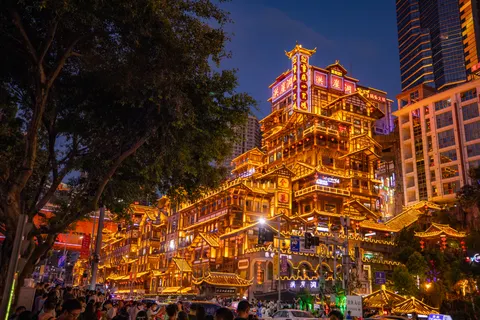
A mountain megacity of cliffside towers, cable cars and monorails at the meeting of two rivers


Planning a trip to Xiamen?
Our concierge team knows Xiamen in depth. Tell us your dates and we'll build an itinerary entirely around you — private, unhurried, considered.
Our team replies to every enquiry by email.