

Komodo
The last dragons and a sea of fire
Komodo
Komodo is the reason people ask whether a place is real. In the Lesser Sundas, between Flores and Sumbawa, a cluster of volcanic islands exists for one creature and one seascape: the Komodo dragon, the world's largest living lizard, and some of the most biodiverse marine territory on earth.
The dragons are not confined or managed for tourism. They range freely across Rinca and Komodo islands, hunting deer and wild boar, occasionally drifting toward the ranger huts with the unhurried confidence of an apex predator that has had no natural competition for millions of years.
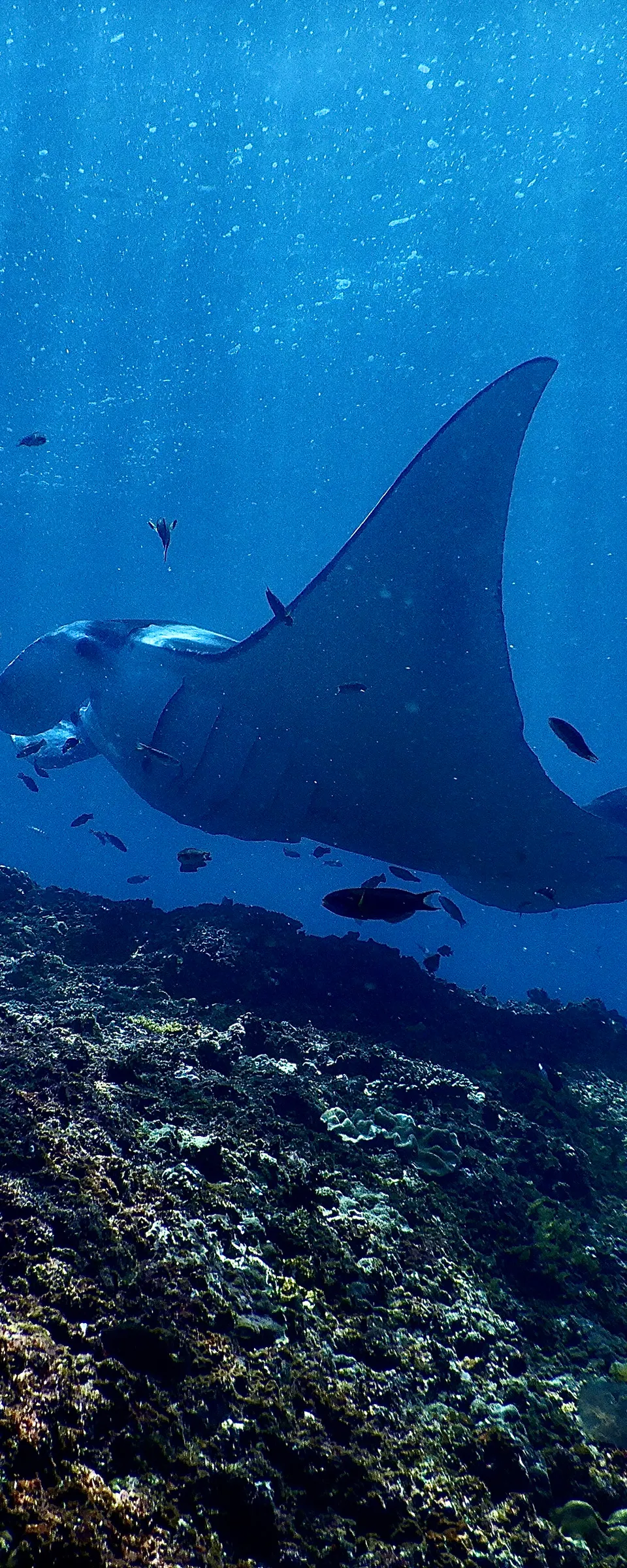
Below the waterline, Indian Ocean and Pacific currents converge to create conditions for manta rays, pygmy seahorses and reef systems that marine biologists travel from Europe to study. Pink Beach, its colour drawn from red coral fragments, is a twenty-minute boat ride from the ranger station, and private boats out of Labuan Bajo plan their itineraries around tidal windows rather than tour schedules.
Established in 1980 to protect the dragons, the park became a UNESCO World Heritage Site in 1991. The dragons can grow to around three metres, and they are genuinely dangerous: their bite carries venom, and they can move fast over short distances. Every walk on Komodo and Rinca goes with a park ranger carrying a forked stick, and visitors stay with the group, keep their distance and follow instructions throughout. Tell your ranger if you have an open wound, before you set off rather than after.
Padar Island, between Komodo and Rinca, holds one of the most famous views in Indonesia. A short, steep climb reaches a ridge overlooking three bays of differently coloured sand, best done at sunrise, ahead of both the heat and the day boats. Pink Beach's colour comes from red coral fragments mixed into white sand, and the snorkelling offshore is excellent. Manta Point draws rays to feed in the current, and Taka Makassar, a sandbank exposed at low tide, is a lovely place to swim.
The diving here ranks among the best in Asia, but currents can turn strong and unpredictable, and many sites suit experienced divers only. Snorkellers still see a great deal at the more sheltered spots, and a good crew picks locations to match the tide.
Labuan Bajo, on the western tip of Flores, is the gateway, grown quickly from a fishing village into a town of hotels and dive centres. Flights from Bali take around an hour. Trips range from single-day tours to multi-night liveaboards, which reach the more remote sites and put you on the water early, before the day boats arrive. Park fees cover entry and activities, and the rules have shifted more than once in recent years, so it's worth checking current requirements before you go.
April to November, the dry season, brings calm seas and clear skies. December to March, the rains arrive, greening the landscape and drawing more plankton, which can bring manta rays closer but also cuts visibility.
Combine Komodo with an overland trip across Flores: the traditional village of Wae Rebo, the coloured crater lakes of Kelimutu. Three days is enough for Komodo itself, longer if diving is the priority.
A three-day liveaboard strikes a good balance between land and sea. Board in Labuan Bajo on the first morning, snorkel a nearby reef, and watch thousands of flying foxes lift off from the mangroves of Kalong Island at dusk. Day two means climbing Padar at sunrise, walking with rangers on Komodo Island to see the dragons, then an afternoon at Pink Beach. On the third, snorkel with manta rays at Manta Point, swim at Taka Makassar, and stop at Rinca for a second chance at the dragons before heading back.
Boats range from simple wooden vessels with shared cabins to luxury phinisi, traditional Indonesian sailing ships converted into proper yachts, and standards vary widely, so check the safety equipment, the crew's experience and the passenger count before booking. The dragons themselves are most active in the cooler morning hours; the mating season, roughly July to August, tends to make them bolder and less predictable, and nesting season that follows can close some trails. Rangers adjust routes to match the dragons' behaviour, and while sightings are very likely, they are never guaranteed.
Labuan Bajo itself has good restaurants with harbour views at sunset, and the hills behind town make for a decent lookout over the islands.
Planning a trip to Komodo?
Our team designs private itineraries for each traveller — no templates, no group tours.
Speak to conciergeHotels we trust in Komodo.
These are the properties we book for our own clients — tested, revisited, and chosen for character as much as comfort.

Labuan Bajo — hillside bay
Plataran Komodo Resort
23 villas on a private bay looking out to the Komodo Islands. The dive centre holds 14 boats and runs the best Komodo dragon and manta ray programmes in Labuan Bajo. The rooftop restaurant earns the sunset.

Komodo — private phinisi charter
Alila Purnama
A 36-metre wooden phinisi for up to eight guests. The Komodo Islands by private yacht — dragons, manta rays, and deserted beaches between dives. The only way to access anchorages that day boats cannot reach.

Labuan Bajo — private beach
Sudamala Komodo Resort
30 villas on a promontory with a private beach on both sides. The most personable team in Labuan Bajo — the dive guides know the Komodo channels the way local fishermen do, not the way dive briefings do.
Our concierge can negotiate preferred rates and arrange room upgrades at most of these properties.
Areas to explore

Rinca Island
The wilder of the two main dragon islands — fewer visitors, more dragons around the ranger station, and closer encounters with the real thing.
Pink Beach
One of only seven naturally pink beaches in the world, coloured by fragments of red coral. Snorkelling directly off the beach reveals walls of staghorn coral and reef fish.

Komodo Dragon, Rinca Island
Manta ray, Komodo waters

Pink Beach, Komodo Island
Padar Island panorama

Labuan Bajo harbour, phinisi

Coral reef, Crystal Rock dive site

Sunset, Komodo National Park

Ngada village, Flores interior
Best: April–June — manta aggregation at its peak
Avoid: August — strong currents, site-specific access may be restricted
Tours & Tickets in Komodo
Activities and skip-the-line tickets, bookable instantly alongside our curated private experiences.
Reading list for Komodo
Essays and guides to deepen your understanding before you travel.

Planning a trip to Komodo?
Our concierge team knows Komodo in depth. Tell us your dates and we'll build an itinerary entirely around you — private, unhurried, considered.
Our team responds within 12 hours — usually faster.