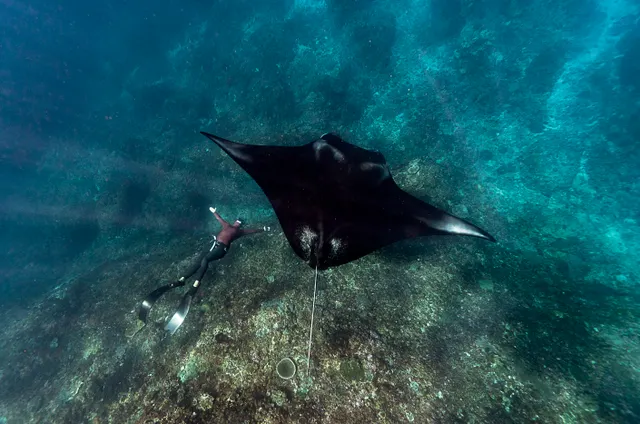
Komodo National Park's dragons get most of the attention in trip-planning conversations, but a genuine share of visitors who make the long journey out to Flores end up talking almost entirely about what they saw underwater once the trip is over. Komodo's diving, built around a specific mix of nutrient-rich currents and a intact reef ecosystem, ranks among the best manta ray encounters available anywhere in recreational diving, and it deserves to be planned for as deliberately as the dragon trek itself, not treated as an afterthought.
This is the honest version, where the manta encounters actually happen, what the currents demand of divers, and how to structure a Komodo trip that does justice to both halves of the park's appeal.
Manta Point: Why It's Considered excellent
Komodo's manta cleaning stations, most famously at the aptly named Manta Point, draw reef mantas with wingspans regularly exceeding three metres, gathering to be cleaned by small fish in numbers and reliability that few other dive destinations can match. Our Komodo dragons guide covers the park's land-based wildlife in detail, and the underwater side deserves equal billing, sightings here are considerably more reliable than at most manta locations worldwide, a genuine function of the specific current patterns that concentrate nutrients at these cleaning stations.
The Currents: Why Komodo Diving Isn't for Complete Beginners
Komodo's reputation among experienced divers rests partly on its manta encounters and partly on its demanding currents, several of the park's best sites involve drift diving in current strong enough that an advanced certification, or at minimum a dive guide experienced with the specific site's conditions, is a real requirement rather than a formality. This isn't a destination to learn to dive at, it's one to visit once open water fundamentals and some drift diving experience are already comfortable.
Beyond Mantas: The Coral and Small Marine Life
Komodo's coral coverage, benefiting from the park's protected status and lower relative visitor density compared to more heavily dived destinations elsewhere in Southeast Asia, remains vibrant across large sections of the park, alongside the manta headline act, the park's muck diving sites offer excellent macro photography opportunities, nudibranchs, pygmy seahorses, and a wide range of reef fish species in a single dive.
Structuring the Trip: Liveaboard vs Land-Based Diving
Komodo's dive sites are spread across a large marine area, making a multi-day liveaboard the more efficient way to cover both the northern manta-focused sites and the southern, cooler-water sites known for occasional mola mola (ocean sunfish) sightings during the right season. Land-based diving from Labuan Bajo remains a workable, more budget-friendly option for a shorter trip, though it generally limits access to the sites closest to port rather than the full spread a liveaboard covers.
Timing the Dragon Trek Around the Diving
A well-built Komodo itinerary treats the dragon trek and the diving as two separate priorities requiring separate planning rather than assuming they naturally fit into the same couple of days, the dragon viewing on Komodo and Rinca islands is best done in the cooler morning hours when dragons are more active, while the best dive conditions at several sites are tide-dependent and don't necessarily align with the same morning window, checking both schedules against a specific multi-day itinerary before booking avoids the common mistake of rushing one to fit the other.
When to Go for the Best Diving Conditions
Komodo's dry season, roughly April through November, generally offers the clearest water and calmer surface conditions for diving, though manta sightings at the northern sites can occur reliably across a wider window than the broader dry-season recommendation suggests, worth confirming current conditions with a local operator rather than relying purely on general seasonal guidance.
Sustainable Diving Practices in a Protected Park
Komodo's status as a national park comes with genuine, actively enforced conservation rules, no touching marine life, controlled group sizes at key sites, and marine park entry fees that directly fund conservation efforts. Choosing an operator with a strong, verifiable environmental track record isn't just a nice-to-have here, it directly affects the long-term health of the exact reefs and manta populations the trip is built around seeing.
Getting to Komodo: Labuan Bajo as the Gateway
Almost every Komodo trip, dive-focused or otherwise, routes through Labuan Bajo on Flores, reachable by direct domestic flight from Bali or Jakarta, making it a reasonably straightforward add-on to a wider Indonesia itinerary rather than a standalone expedition. Building in a buffer day around flights is worth doing given the smaller airport's occasional weather-related delays, particularly during shoulder season months.
Frequently Asked Questions
Do I need advanced diving certification for Komodo? Not strictly required everywhere in the park, but an advanced certification or genuine drift diving experience is strongly recommended for several of Komodo's best and most current-affected sites, including some manta locations.
Are manta ray sightings guaranteed at Manta Point? Not guaranteed, but Komodo's manta cleaning stations offer considerably more reliable sightings than most other dive destinations worldwide, a function of the specific current and nutrient patterns in the area.
Is a liveaboard necessary, or can I dive Komodo from land? A liveaboard covers considerably more of the park's dive sites, but land-based diving from Labuan Bajo remains a workable, more affordable option for a shorter trip focused on the sites closest to port.
Can I combine dragon trekking and diving in the same Komodo trip? Yes, and most visitors do, but the two activities require separate scheduling consideration, dragons are best viewed in cool morning hours while the best dive conditions at some sites are tide-dependent.
How many days should a Komodo diving trip include? A four to seven night liveaboard covers the park's main manta and reef sites without rushing, shorter land-based trips of two to three days remain workable if focused specifically on sites near Labuan Bajo.
Is Komodo diving suitable for a first-time certified diver? It's workable for many of the calmer sites, but the park's stronger-current locations, including several manta stations, are better suited to divers with some drift diving experience already under their belt.