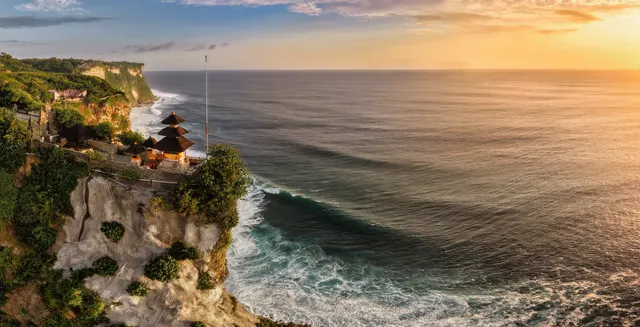
Radhanagar Beach has been named Asia's finest beach by international travel press repeatedly, and the detail that surprises most people is that it's Indian: part of the Andaman Islands, an archipelago in the Bay of Bengal that sits geographically closer to Thailand and Myanmar than to mainland India. The water reflects that Southeast Asian character more than a subcontinental one. A wide arc of white sand backed by dense forest, with a shallow turquoise shelf that stays swimmable well past the shoreline.
This is the honest version of why Radhanagar keeps winning international rankings, what the rest of the Andamans actually offer beyond the one famous beach, and how to plan a trip that most travellers still overlook entirely.
Why Radhanagar Keeps Winning "Asia's Best Beach"
Radhanagar, officially Beach No. 7 on Havelock Island, earns its repeated award wins on genuine merit rather than marketing: a rare combination of a wide, uncrowded stretch of sand, a shallow, gently shelving shoreline that stays calm and swimmable, and a forest backdrop dense enough that the beach never feels built-out despite decades of steadily growing tourist awareness. Our Radhanagar Beach and Neil Island day trip covers a full day built around proper time here, paired with a boat crossing to Neil Island's quieter shoreline and natural rock arch.
Why India Rarely Gets Credit for This
The Andamans require a flight connection through Port Blair rather than a land crossing, which has kept visitor numbers meaningfully lower than the islands' beach quality would otherwise suggest, and has also kept the Andamans out of the "best of India" conversation that tends to focus on Rajasthan, Kerala, and the Golden Triangle. The islands' Southeast Asian geography and character, more Thai-adjacent than mainland Indian in feel, adds to the disconnect. Many travellers simply don't think to look for an excellent beach destination within India's own borders.
Diving: The Andaman Sea's Underrated Reef
Havelock's dive sites, Nemo Reef and Barracuda City among the best-regarded, sit in water with over 1,200 recorded fish species and reef systems that remain considerably less dived than comparable sites in Thailand or Indonesia. Our Havelock Island Scuba Diving guide covers a PADI-affiliated two-dive trip suited to both newly certified and experienced divers: a genuine advantage for anyone wanting reef time without a crowded dive boat competing for the same site.
Neil Island: The Quieter Second Stop
Neil Island, smaller and less developed than Havelock, offers its own beaches, tide pools, and a naturally formed limestone rock arch that has become one of the archipelago's most photographed non-beach landmarks. It rewards travellers willing to add an extra day rather than treating Havelock as the entire Andaman experience. The pace here is noticeably slower again than Havelock's already-relaxed rhythm.
Port Blair: More Than a Layover
Most itineraries treat Port Blair purely as the flight gateway, but the Cellular Jail, a colonial-era prison turned museum documenting India's independence movement, is a worthwhile, sobering half-day stop for travellers with time before or after the island-hopping portion of the trip. It's easy to skip entirely given the pull of Havelock's beaches, but it adds real historical context to an archipelago most visitors experience purely as a beach destination.
When to Go
November through April brings the calmest seas, the best diving visibility, and the most reliable beach weather, broadly the same dry season that governs most of tropical South and Southeast Asia. The monsoon months, roughly May through September, bring rougher seas and reduced ferry reliability between islands. Worth avoiding unless flexibility with the itinerary is built in.
Getting Around: Ferries, Not Roads
Inter-island travel in the Andamans happens almost entirely by ferry: Port Blair to Havelock, Havelock to Neil, and back, rather than by road, since the islands aren't connected by bridges. Booking ferry tickets a few days ahead during peak season, rather than assuming same-day availability, avoids the common mistake of arriving at the jetty to find the next sailing sold out.
Comparing the Andamans to Other Asia Beach Destinations
For travellers weighing a trip to the Andamans against more established Southeast Asia beach destinations, the honest comparison point is that the Andamans offer comparable, in some respects superior, beach quality with meaningfully lower visitor density. The trade-off is less developed tourist infrastructure and a longer, more deliberate journey to get there. Travel Buzzy's guide to the world's best beaches is a useful reference for seeing how Radhanagar's reputation stacks up against other award-winning coastlines worldwide. Within Excurze's own destinations, our Kerala backwaters guide offers a completely different, mainland version of India's coastal appeal for travellers building a longer India-focused trip.
Money and Connectivity
ATMs are reliably available in Port Blair and, more sparingly, on Havelock. Worth withdrawing enough cash before heading to Neil Island specifically, where options are considerably more limited. Mobile network coverage extends across all three main hubs but drops noticeably on the ferry crossings between islands, a genuine, mostly welcome disconnect built into the itinerary rather than a technical inconvenience to work around.
Frequently Asked Questions
Is Radhanagar Beach really better than beaches in Thailand or the Philippines? It's comparable in quality: wide white sand, shallow turquoise water, and international press has ranked it among Asia's very best. The real differentiator is visitor density; Radhanagar remains considerably less crowded than equivalent-quality beaches elsewhere in the region.
How do I get to the Andaman Islands? Fly into Port Blair from major Indian cities, then take a ferry to Havelock Island (roughly 2-3 hours) and onward to Neil Island if extending the trip.
How many days should I budget for the Andamans? Five to seven days allows a realistic pace across Port Blair, Havelock, and Neil Island without rushing the ferry connections between them.
Is diving in the Andamans worth it compared to Southeast Asia? Yes, particularly for divers seeking less-crowded reef sites. The Andaman Sea's coral coverage rivals Southeast Asia's better-known destinations without the same level of dive-boat traffic.